
TMJ & Jaw Pain Treatment in Chandigarh
Relief from jaw pain, clicking, teeth grinding and related headaches at Pristine Dental, Sector 19D. Most TMJ problems improve with simple, non-surgical care — and we’ll help you find what works.
Conservative, non-surgical first · Custom night guards & splints · Botox for jaw clenching · Open all 7 days
🌿 Most TMJ pain improves without surgery
Non-surgical first
CONSERVATIVE CARE
14+
YEARS EXPERIENCE
4.9★
GOOGLE RATINGS
Splints & Botox
BOTH IN HOUSE
DOES THIS SOUND LIKE YOU?
Jaw pain, clicking or headaches? You're not imagining it
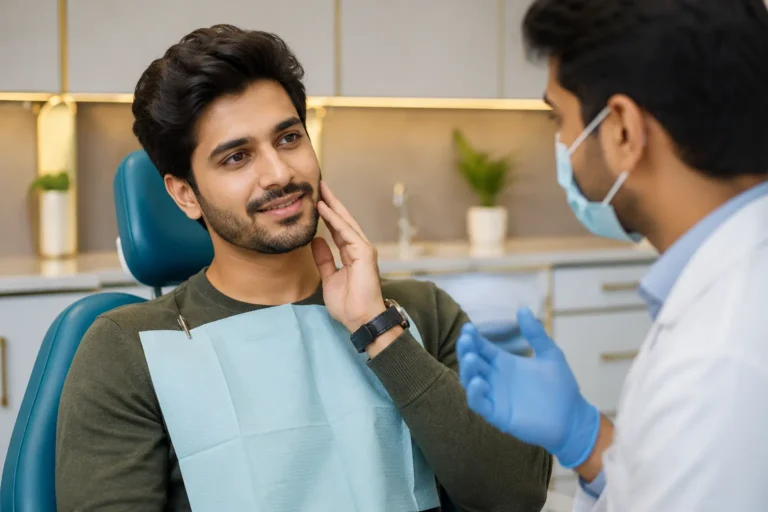
If your jaw aches, clicks or pops when you eat, feels stiff in the morning, or you wake with headaches and worn teeth, there’s a good chance it’s related to your temporomandibular joint (TMJ) — the hinge that connects your jaw to your skull. It’s a real, common and treatable condition, and you don’t have to just live with it. The reassuring part: most people get lasting relief with simple, non-surgical care.
THE BASICS
What is TMJ disorder (TMD)?
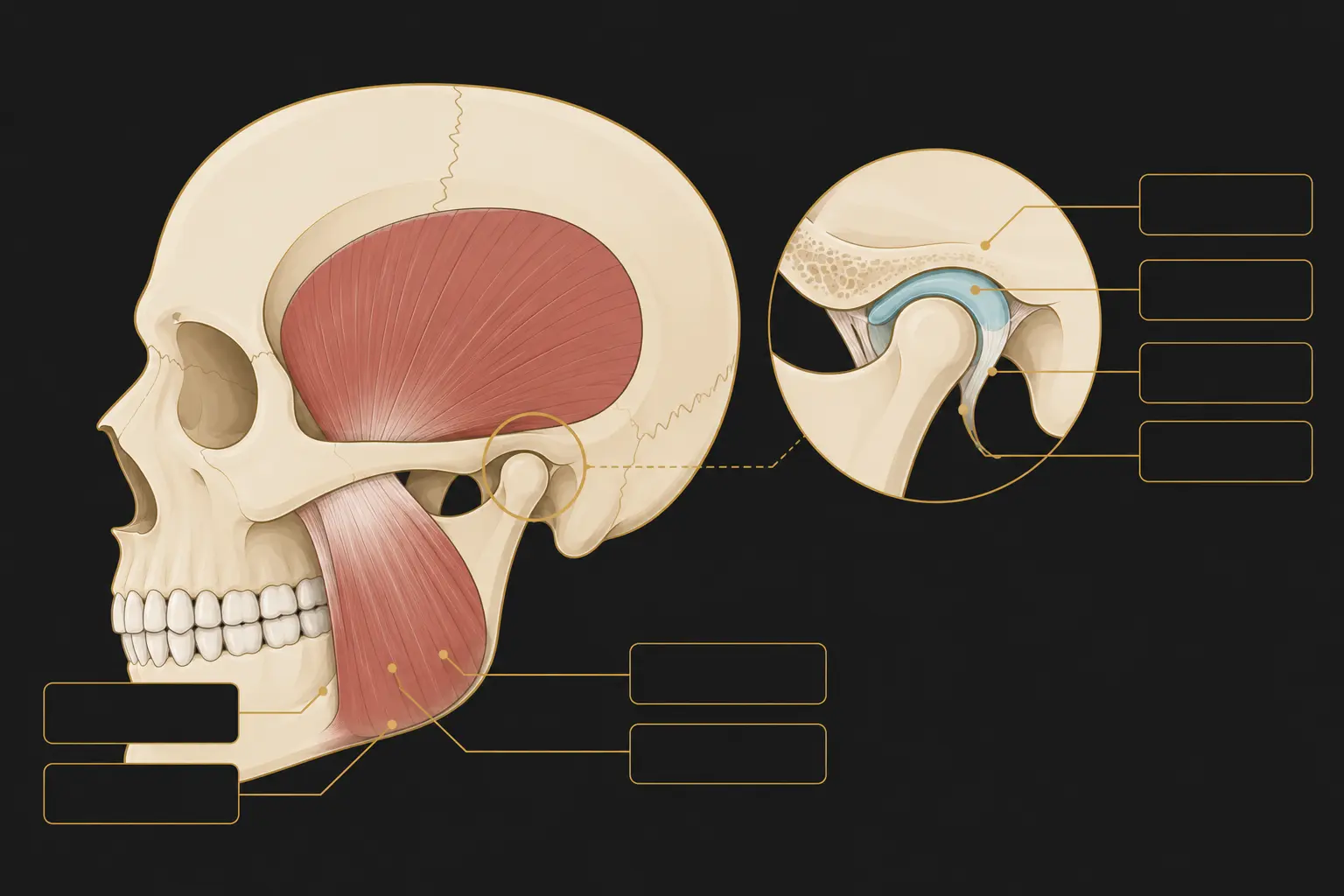
TMJ refers to the temporomandibular joint — the hinge on each side of your jaw. When this joint and its muscles aren’t working comfortably, it’s called a temporomandibular disorder (TMD), though most people just call it “TMJ.” It commonly causes jaw pain, clicking or popping, and headaches, and is often linked to teeth grinding, clenching and stress.
New here? Read our full guide on TMJ disorder — symptoms, causes & treatment.
Key Takeaways
- Affects the jaw joint and the muscles that move it
- Signs: jaw pain, clicking, stiffness, headaches, hard to chew
- Often linked to grinding/clenching (bruxism) and stress
- Most cases managed with non-surgical, reversible care
- Options from self-care and night guards to Botox
- Surgery is rarely needed — a last resort only
SYMPTOMS
Signs of TMJ disorder
- Jaw pain, aching or tenderness (often near the ear)
- Clicking, popping or grating when you open or chew
- Jaw stiffness, or the jaw "locking" or catching
- Difficulty or discomfort opening wide or chewing
- Frequent headaches or facial/temple pain
- Earache or fullness in the ear (with no infection)
- Worn, flattened, sensitive or cracked teeth
- Waking with a tired or sore jaw
Common causes: teeth grinding/clenching (bruxism), often driven by stress · jaw injury · arthritis · a bite imbalance · habits like gum-chewing or chin-resting.
GENTLEST OPTIONS FIRST
How TMJ is treated
Self-care
Soft diet, heat/cold, habits
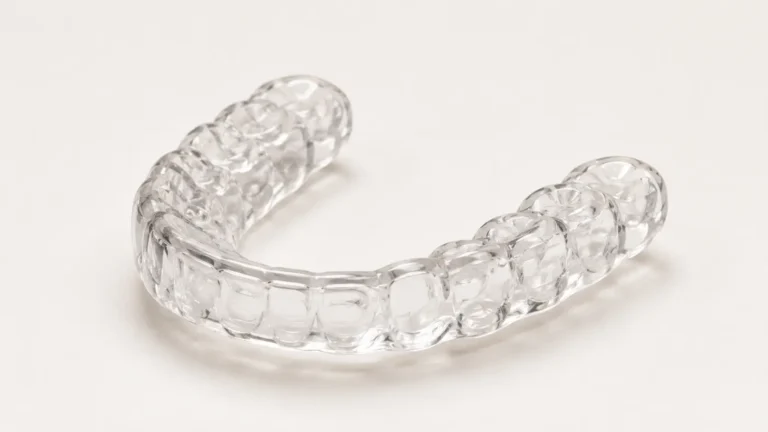
TMJ Splint
Custom splint
Physio
Jaw exercises
Medication
Short-term relief
Botox
Relax jaw muscles
Advanced
Rarely needed
Simple things that help right now
- Eat softer foods, cut into smaller pieces
- Apply a warm compress (or cold pack for sharp pain)
- Avoid wide yawning, gum-chewing & hard foods
- Keep teeth slightly apart when not eating
- Reduce stress; relax the jaw
Botox for jaw clenching
For jaw pain driven by overactive muscles, small Botox injections relax the clenching muscles and reduce pain — a quick, non-surgical option that pairs well with a night guard.
Note: Botox for TMJ is used off-label (not specifically FDA-approved for TMJ), though studies support it for jaw-muscle pain. We’ll advise if it suits you.
Learn about our TMJ treatment. Click here
THE TRUTH ABOUT TMJ
'Is TMJ serious? Myths vs facts'
MYTH
FACT
Painless clicking is common and often needs only monitoring.
MYTH
TMJ always needs surgery.
FACT
The vast majority improve with non-surgical, reversible care.
MYTH
Nothing can be done for teeth grinding.
FACT
A custom night guard protects teeth and eases symptoms very effectively.
MYTH
A dentist can’t help jaw pain.
FACT
Dentists commonly diagnose and treat TMJ, especially with grinding or bite issues.
TRUSTED CARE
Why choose Pristine Dental for jaw pain
We take it seriously
A proper assessment of joint, muscles, bite and habits — not a brush-off.
Conservative first
We start with the simplest, reversible options and only step up if needed.
Splints & Botox in-house
As a dental & orofacial care clinic, we offer both under one roof.
REAL SMILES
What our patients say
“I am incredibly grateful to Dr. Nakul for the outstanding care and expertise shown throughout my dental implant and TMJ treatment. From the very first consultation, I felt confident that I was in the best hands. The implant procedure was smooth, precise, and virtually painless — a true testament to their skill and attention to detail. What impressed me even more was the thoughtful approach to treating my TMJ issues. The relief I’ve experienced since starting the treatment has been life-changing. Dr. Nakul took the time to understand my symptoms, explain every step of the process, and tailor the care to my specific needs. Thank you for restoring not just my smile, but also my comfort and confidence. I highly recommend Dr. Nakul to anyone seeking compassionate and cutting-edge dental care.”
— [Supriya Sharma]
Frequently Asked Questions
- What is TMJ disorder?
- TMJ disorder (TMD) is a problem with the jaw joint and the muscles that move it, causing jaw pain, clicking or popping, stiffness and headaches. It's common and treatable.
- Will my jaw pain go away on its own?
- Many mild cases improve within weeks with simple self-care like a soft diet, warm compresses and avoiding gum-chewing. If pain is persistent, worsening, or your jaw locks, it's best to get it assessed.
- Does a custom TMJ splint help TMJ?
- Yes — a custom TMJ splint (occlusal splint) is one of the most effective, low-risk treatments. It relaxes the jaw muscles, cushions the joint and protects your teeth from grinding.
- Does Botox help jaw pain and clenching?
- For muscle-driven jaw pain, small Botox injections can relax the overactive clenching muscles and reduce pain. Note that Botox for TMJ is used off-label (not specifically FDA-approved for TMJ), though studies support it for jaw-muscle pain.
- Which doctor treats TMJ / jaw pain?
- Dentists commonly diagnose and treat TMJ, especially where grinding, the bite or the teeth are involved. We assess the joint, muscles, bite and habits and offer splints, Botox and other non-surgical care.
- Is surgery needed for TMJ?
- Rarely. The great majority of people improve with conservative, non-surgical care. Surgery is considered only when other treatments haven't helped.
Don't just live with jaw pain — let's find you relief.
Book your TMJ consultation — a proper assessment and a gentle, non-surgical plan.