
Root Canal Treatment in Chandigarh
A comfortable, virtually painless root canal that stops your toothache, clears the infection and saves your natural tooth — with single-sitting treatment available at Pristine Dental, Sector 19D.
Virtually painless · Single-sitting available · Saves your natural tooth · Open all 7 days.
🦷 It stops the pain — the myth that it causes pain, busted below

Virtually painless
MODERN ANESTHESIA
Single sitting
WHERE SUITABLE
4.9★
GOOGLE RATING
Saves your tooth
KEEP YOUR OWN TOOTH
URGENT CARE
In pain right now? We can help.
A throbbing toothache, pain on biting or swelling usually means an infection that won’t settle on its own — and it’s easier to treat the sooner you come in. Call us and we’ll see you as quickly as possible, often the same day.
THE BASICS
What is a root canal treatment?
Inside every tooth is a soft core called the pulp — the nerve and blood supply. When deep decay, a crack or trauma lets bacteria reach the pulp, it becomes infected and painful. During a root canal, we gently remove the infected pulp, clean and disinfect the tiny canals inside the root, and seal them. The tooth is then restored — usually with a crown — so you keep your own natural tooth instead of losing it.
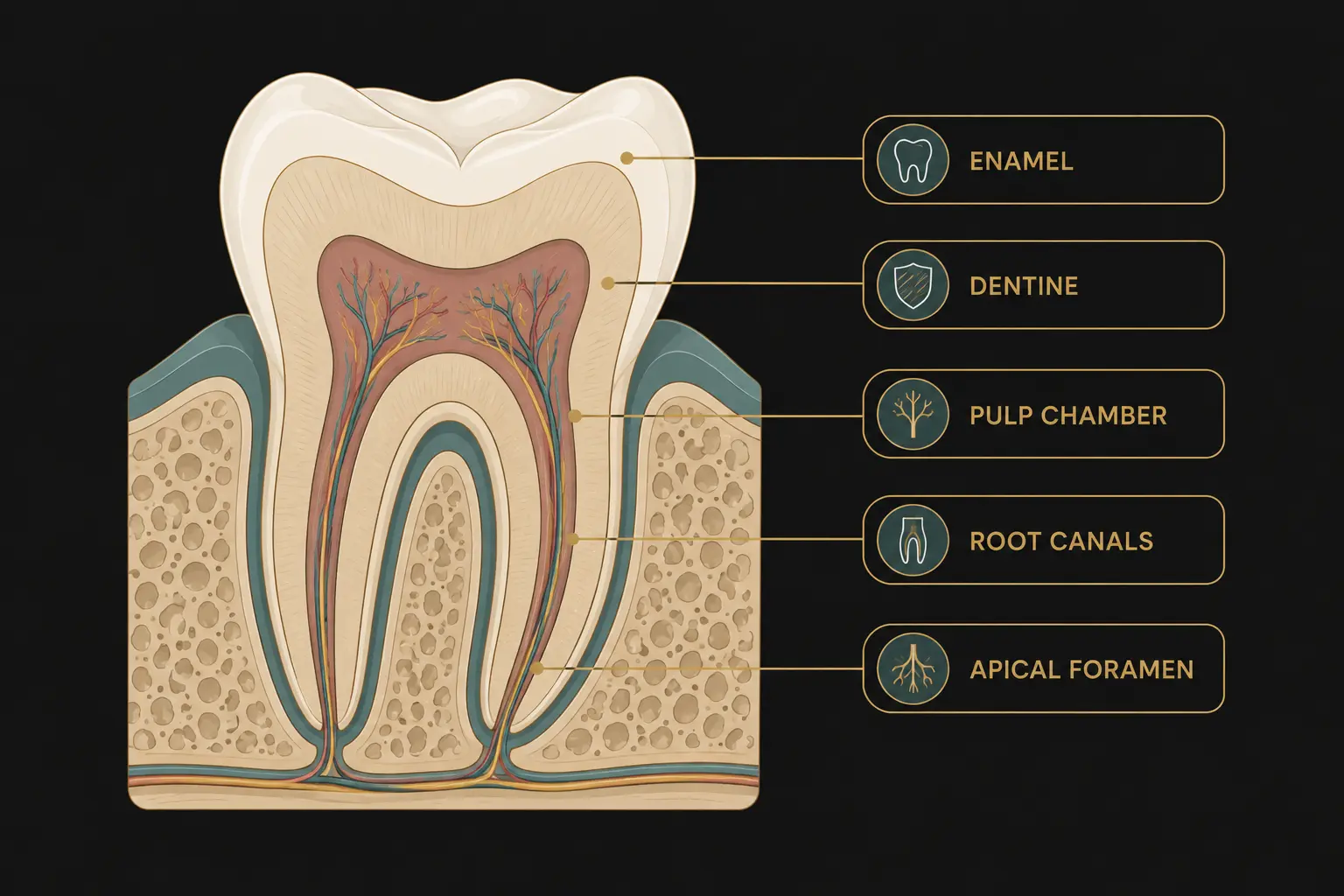
Key Takeaways
- Removes infection and saves the natural tooth
- It relieves the pain of an infected tooth — doesn't cause it
- Virtually painless with modern anaesthesia — like a filling
- Many teeth treated in a single sitting; some need two
- A protective crown is usually recommended afterward
- A well-restored tooth can last many years, often a lifetime
DON’T WAIT
Signs you may need a root canal
- Severe or throbbing toothache
- Pain on biting or pressure
- A "pimple" or gum boil near a tooth
- Lingering sensitivity to hot or cold
- Swelling of the gum or face
- A deeply decayed, broken or discoloured tooth
Some infected teeth cause little or no pain and are found on an X-ray — which is why regular check-ups matter.
COMFORTABLE & STEP BY STEP
What happens during a root canal
Diagnosis
Exam & digital X-ray
Numbing
Fully numbed & comfortable
Cleaning
Infected pulp removed
Sealing
Canals filled & sealed
Crown
Tooth restored & protected
SAVE IT REMOVE IT
Root canal vs extraction
Most treatments take about 45–90 minutes per visit — and many are completed in a single sitting.
| Root Canal (save the tooth) |
Extraction (remove the tooth) |
|
|---|---|---|
| Your natural tooth | Kept | Lost |
| Pain relief | Yes — removes the infection | Yes — but the tooth is gone |
| Bite & chewing | Preserved | Affected until replaced |
| What comes next | Usually a crown | Implant or bridge to fill the gap |
| Neighbouring teeth | Undisturbed | Can drift / tilt into the gap |
| Long-term cost | Often lower overall | Extraction plus replacement |
If a tooth can’t be saved, we’ll replace it with a dental implant or bridge.
THE TRUTH ABOUT ROOT CANALS
Does a root canal hurt? Myths vs facts
MYTH
A root canal is extremely painful.
FACT
The pain comes from the infection, not the treatment. With anaesthesia it feels like a filling — and it relieves your toothache.
MYTH
It’s better to just pull the tooth.
FACT
Nothing works as well as your own tooth. Saving it keeps your bite and avoids the cost of replacing it.
MYTH
Root canals cause illness.
FACT
This comes from long-debunked, century-old research. Root canal treatment is safe and removes infection.
MYTH
It takes many long, painful visits.
FACT
Many root canals are done in a single sitting, with comfort managed throughout.
MYTH
If the pain stops, I don’t need it.
FACT
Pain easing can mean the nerve has died while the infection continues silently. It still needs treating.
THE FINAL STEP
Why you'll usually need a crown afterward
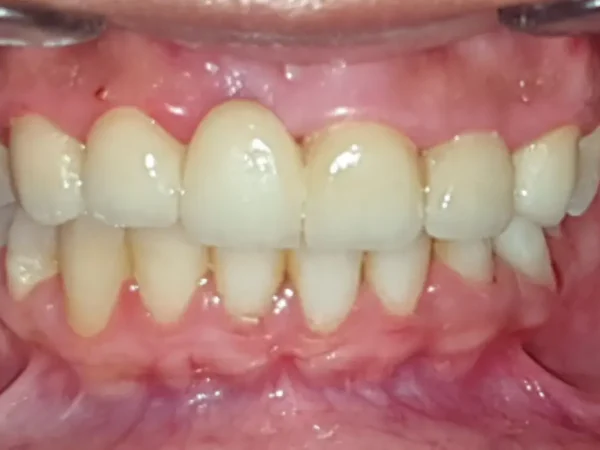
A root-canal-treated tooth has had its inner pulp removed, which can leave it more brittle over time — especially back teeth that take heavy biting force. A crown (cap) covers and protects the tooth, restoring its full strength and helping it last for years. For some front teeth a simpler restoration may be enough — we’ll recommend the right option and walk you through it.
TRUSTED CARE
Why choose Pristine Dental for your root canal
Comfort-first
Virtually painless technique with modern local anaesthesia.
Single-sitting
Completed in one visit where suitable — less time in the chair.
Save your tooth
Complete care under one roof — from root canal to protective crown.

REAL SMILES
What our patients say
“My teeth RCT experience with Dr.Nakul Singla was wonderful. I am satisfied with my teeth . A very calm , patient environment. I would like to Recommend Pristine’s Dental and Facial Care clinic to the ones that need it the most.”
— [Neelam Singh]
“I had gone for the RCT of my six years old daughter. Han a wonderful experience. Both the Doctors are very friendly, cooperative, understanding and have done the treatment very patiently. Now my daughter has become a fan of both the Doctor’s.
I would definitely recommend that please rush and go the PRISTINE for any dental problems.
Thanks to Dr Nakul Singla and Dr Vidyalakhmi Mam for being so good..🙏🙏”
— [Neha Kamra]
“Dr. Vijayalakshmi and Dr. Nakul both are soft spoken, expert, goes deep in the root cause of problem. I had RCT by Dr. Vijayalakshmi and i’m seriously so scared of the pain previously but she made me so comfortable and done proper treatment with hygiene and very less pain. Quality of their work reflects. So, i am happy and recommend others to this place.
“
— [Urvashi]
Frequently Asked Questions
- Is a root canal painful?
- No — this is the biggest myth about root canals. The pain comes from the infection, not the treatment. With modern local anaesthesia the procedure feels much like having a filling, and it relieves your toothache.
- Can a root canal be done in a single sitting?
- Yes, many root canals can be completed in a single sitting when there's no active swelling and the tooth cleans up well. Some cases are safer done over two visits; we'll advise after the X-ray.
- Do I really need a crown after a root canal?
- In most cases, yes — especially for back teeth. A root-canal-treated tooth can become brittle, and a crown protects it and restores full strength so it lasts for years. Some front teeth may need only a simpler restoration.
- Root canal or extraction — which is better?
- Wherever it's sensible, saving your natural tooth with a root canal is the better long-term choice. Nothing replaces your own tooth as well, and extraction usually means paying to replace the tooth later with an implant or bridge.
- How long does a root-canal-treated tooth last?
- With a proper crown and normal oral care, a root-canal-treated tooth can last many years, often a lifetime.
- How many visits does a root canal take?
- Often just one visit; some teeth need two. It depends on the tooth, the amount of infection and whether there's swelling.
- What happens if I don't get a root canal?
- The infection won't heal on its own. It usually worsens into an abscess with swelling and bone damage, and the tooth is often eventually lost. Treating it early is easier and less expensive.
- My tooth stopped hurting — do I still need the root canal?
- Very likely yes. Pain easing can mean the nerve has died while the infection quietly continues. The tooth still needs treatment.
A comfortable, virtually painless root canal — single-sitting available. In pain? Call us and we’ll see you as soon as possible.