

Teeth Grinding (Bruxism) & Night Guards: A Complete Guide
Quick Answer
Bruxism is the involuntary clenching or grinding of teeth, most often during sleep. It is usually driven by stress, sleep problems, caffeine, alcohol or an uneven bite, and left unchecked it wears down teeth and causes jaw pain and headaches. The most effective first step is a custom-made night guard, which cushions the bite and protects your teeth and jaw — backed by stress management and lifestyle changes. A dentist-made guard fits far better and lasts much longer than a shop-bought one.
If you wake with a dull headache, an aching jaw, or teeth that feel sensitive — or your partner has heard you grinding in your sleep — you may have bruxism. It is extremely common, often goes unnoticed for years, and quietly damages teeth the whole time. The good news is that it is easy to manage once it is spotted. This guide, written by a practising dentist, explains what causes teeth grinding, how to recognise it, what it does if left untreated, and how night guards and other treatments protect your smile — for patients across Chandigarh, Mohali, Panchkula and Zirakpur.
Key Takeaways
- Bruxism is clenching or grinding of teeth, mostly during sleep and often unnoticed.
- Stress is the most common trigger, along with sleep issues, caffeine, alcohol and bite problems.
- Untreated grinding wears and cracks teeth and causes jaw pain and headaches.
- A custom night guard is the main treatment — it protects teeth and eases the jaw.
- Custom guards beat shop-bought ones on fit, comfort and durability.
- Stress management and lifestyle changes tackle the underlying cause.
What Is Bruxism?
Bruxism is the medical term for involuntarily clenching, gnashing or grinding your teeth. It happens in two forms: sleep bruxism, which occurs at night and is the most common and most damaging because you cannot control it, and awake bruxism, where you clench your jaw during the day, often without realising, usually when concentrating or stressed. Many people have no idea they do it until a partner hears the grinding, or a dentist notices the tell-tale wear on their teeth.
What Causes Teeth Grinding?
Bruxism usually has more than one cause, but stress and sleep are at the top of the list. The main contributors are:
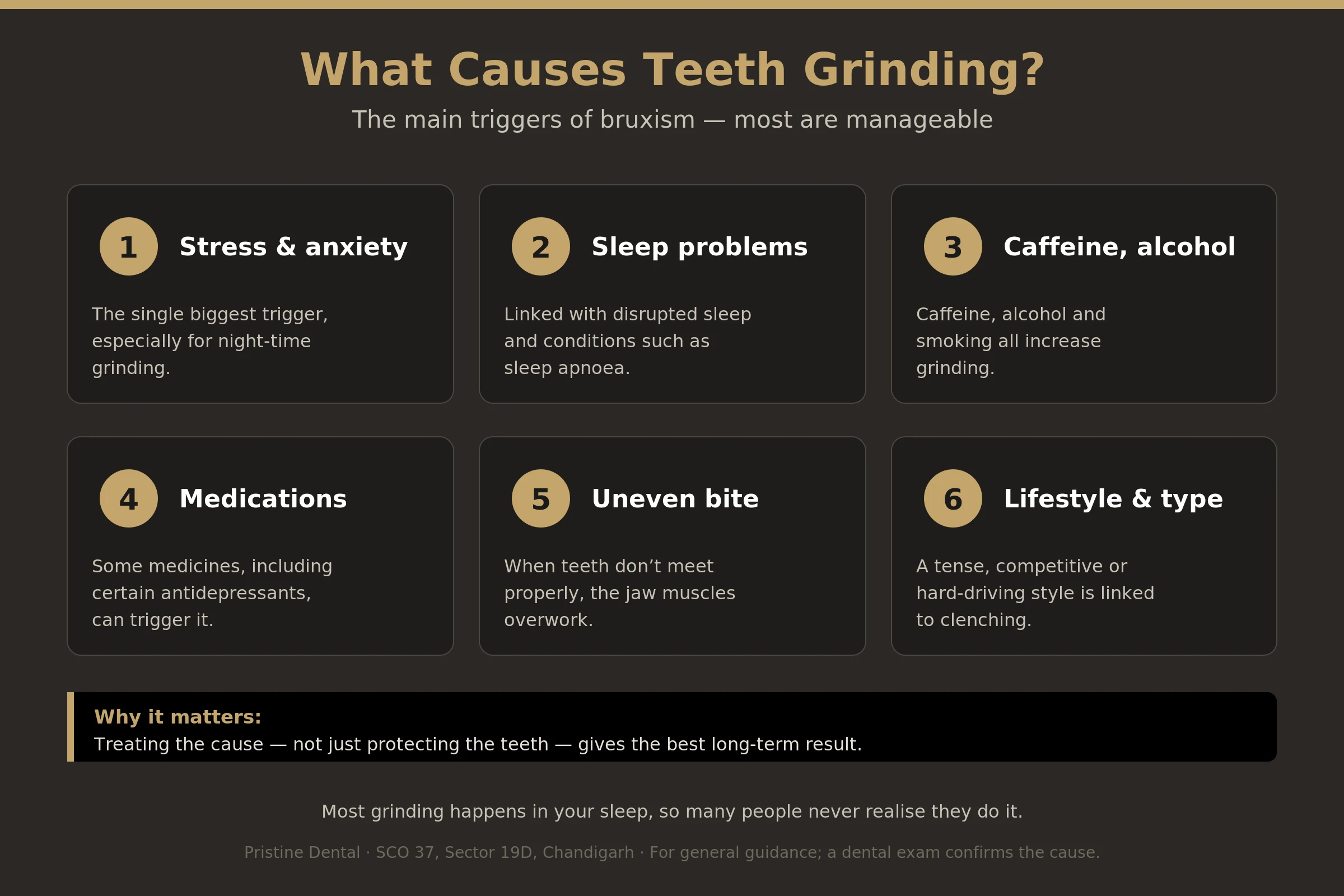
- Stress and anxiety — the single most common trigger, especially for night-time grinding.
- Sleep problems — bruxism is linked with disrupted sleep and conditions such as sleep apnoea.
- Caffeine, alcohol and smoking — all increase the likelihood and intensity of grinding.
- Certain medications — some, including certain antidepressants, can trigger it.
- An uneven bite or misaligned teeth — when teeth don't meet properly, the jaw overworks.
- Lifestyle and personality — a tense, competitive or hard-driving style is associated with clenching.
Working out which of these apply to you matters, because treating the cause — not just protecting the teeth — gives the best long-term result.
Signs and Symptoms of Bruxism
Because most grinding happens in your sleep, the symptoms — not the act — are usually what give it away. Watch for:
- Morning headaches, especially a dull ache around the temples.
- Jaw pain, soreness or tiredness, and sometimes clicking.
- Worn, flattened, chipped or cracked teeth.
- Increased tooth sensitivity as enamel wears thin.
- A grinding sound at night that a partner notices.
- Earache or a feeling of fullness in the ears, without infection.
- Indentations on the tongue or cheek-biting.
Spotted at a check-up
Dentists often detect bruxism before patients do, from the distinctive wear patterns on the teeth. This is one reason regular check-ups matter — the earlier grinding is caught, the less damage it does.
What Happens If Bruxism Is Left Untreated?
Grinding exerts far more force than normal chewing, so over time it causes real, cumulative damage. Left unchecked, bruxism can lead to:
- Worn-down, flattened teeth that look shorter and age the smile.
- Chipped, cracked or loosened teeth, sometimes needing crowns or other repairs.
- Damage to existing dental work — fillings, crowns, veneers and implants.
- Chronic jaw pain and TMJ problems from overworked muscles and joints.
- Persistent headaches and disturbed sleep.
- Heightened tooth sensitivity as protective enamel is lost.
None of this is meant to alarm you — it simply explains why acting early, usually with a night guard, is so worthwhile. For more on the jaw side of this, see our guide to TMJ disorders.
Night Guards: Your First Line of Defence
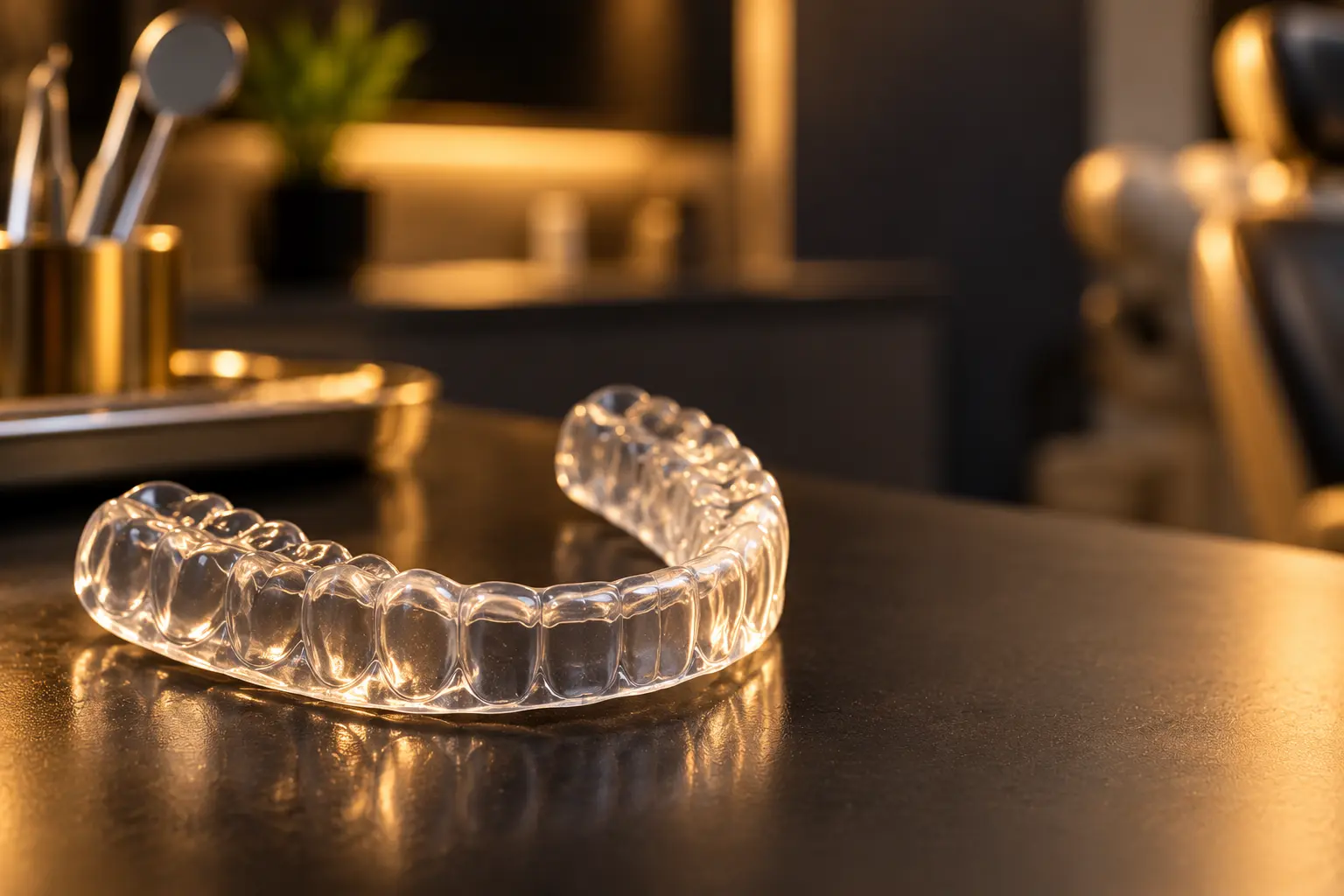
A night guard is a custom-made appliance worn over the teeth at night that cushions the bite, absorbs grinding forces and protects both teeth and jaw. It doesn't always stop the grinding itself, but it takes the damage — so your teeth don't. A well-made guard also helps relax the jaw muscles, easing the headaches and soreness that come with bruxism.
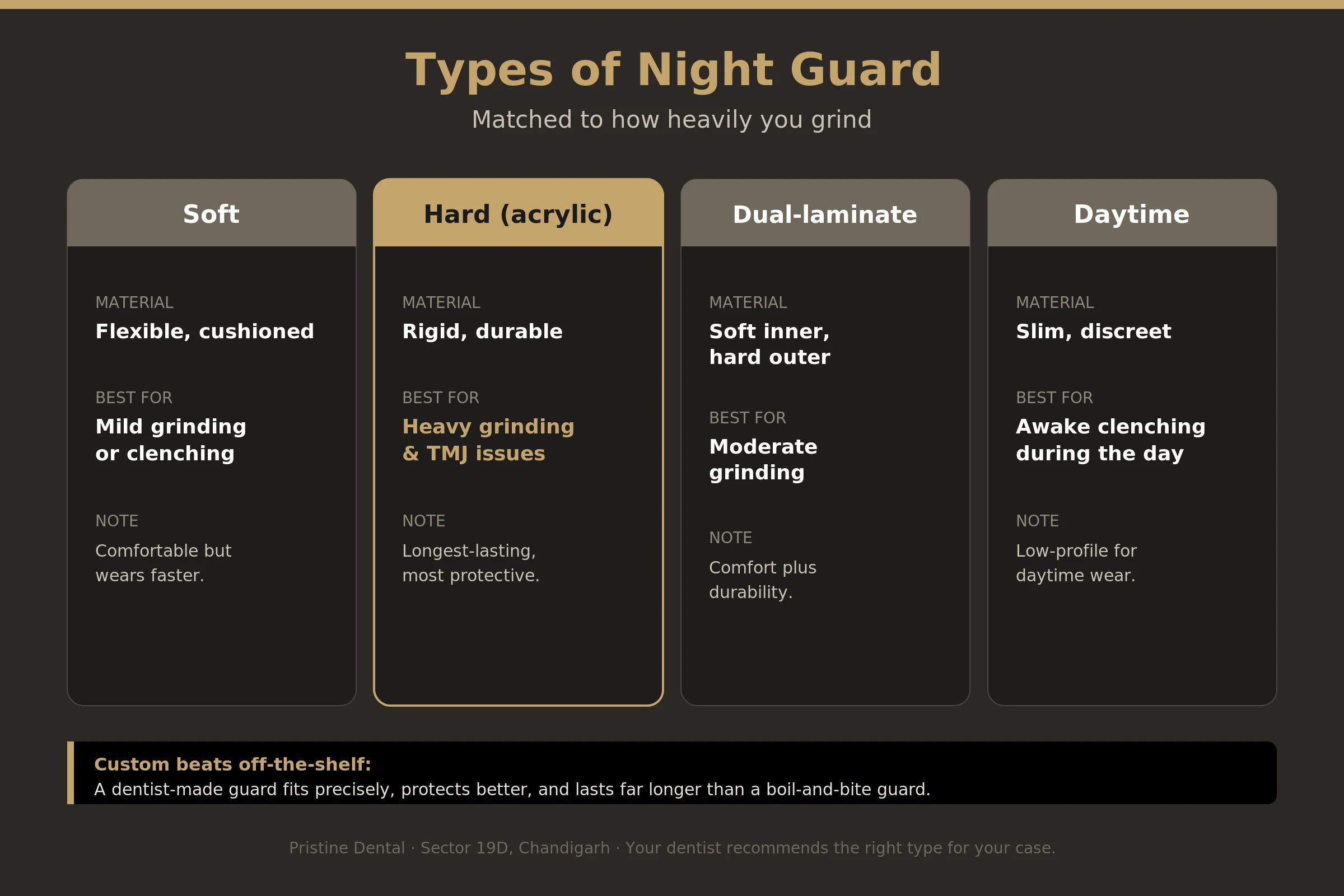
The main types of night guard
| Type | What It Is | Best For |
|---|---|---|
| Soft guard | Flexible, cushioned material | Mild grinding or clenching |
| Hard (acrylic) guard | Rigid, highly durable | Heavy grinding and TMJ issues |
| Dual-laminate (hybrid) | Soft inner layer, hard outer shell | Moderate grinding — comfort plus durability |
| Daytime guard | Slim, discreet appliance | Awake clenching during the day |
Your dentist recommends the type based on how heavily you grind and whether you also have jaw-joint symptoms. Heavy grinders usually need a hard acrylic guard; milder cases may be comfortable in a soft or dual-laminate one.
Custom vs Over-the-Counter Night Guards
A dentist-made guard is custom-fitted to your teeth, while shop-bought "boil-and-bite" guards are generic — and the difference shows in comfort, fit and how long they last.
| Feature | Custom (dentist-made) | Over-the-counter |
|---|---|---|
| Fit | Made from a scan/impression of your teeth | Generic, one-size-fits-most |
| Comfort | Snug and comfortable for nightly wear | Often bulky; can fall out |
| Durability | Long-lasting, especially hard acrylic | Typically wears out in months |
| Protection | Tailored to your grinding pattern | Basic, variable protection |
An over-the-counter guard can be a short-term stopgap, but for anyone grinding regularly, a custom guard is a better long-term investment — it fits better, protects more reliably, and lasts far longer. A poorly fitting guard can even make clenching worse.
Other Treatments for Teeth Grinding
A night guard protects your teeth, but the best results come from also addressing why you grind. Depending on the cause, your dentist may suggest:
- Stress management — relaxation, exercise, better sleep habits, or counselling for stress-driven grinding.
- Cutting back on caffeine, alcohol and smoking, which all worsen bruxism.
- Bite correction — if misaligned teeth are a factor, braces or clear aligners can help.
- Treating related jaw problems — alongside TMJ and facial-pain care where needed.
- Botox — in selected cases, small injections relax over-active jaw muscles.
- Repairing damage — worn or chipped teeth may need bonding, crowns or veneers once grinding is controlled.
How to Care for Your Night Guard
- Rinse it in cool water and brush it gently each morning.
- Clean it regularly with a mild soap or a guard cleaner — not hot water, which can warp it.
- Store it dry in its ventilated case, away from pets and heat.
- Bring it to check-ups so your dentist can inspect it for wear.
- Replace it when worn — a guard that's cracked or thinning no longer protects properly.
Why Choose Pristine Dental in Chandigarh

Pristine Dental is a modern, ethics-first practice at SCO 37, First Floor, Sector 19D, Chandigarh, caring for patients across Chandigarh, Mohali, Panchkula, Zirakpur, Kharar, New Chandigarh and the wider Tricity. We treat the cause of your grinding, not just the symptoms, starting with the simplest effective step.
- Careful assessment of tooth wear, bite and jaw to confirm bruxism and its cause.
- Custom night guards made precisely from digital scans or impressions.
- Bite correction and restorative options when grinding has caused damage.
- Honest, conservative care — we start simple and escalate only if needed.
- Open seven days a week, convenient for the whole Tricity.
Frequently Asked Questions
What is bruxism?
Bruxism is the medical term for involuntarily clenching or grinding your teeth, most often during sleep. It is very common and frequently goes unnoticed until it causes tooth wear, jaw pain or headaches.
What causes teeth grinding?
The most common cause is stress, along with sleep problems, caffeine, alcohol, smoking, certain medications and an uneven bite. Usually several factors combine, which is why identifying the cause matters.
How do I know if I grind my teeth?
Common signs include morning headaches, a sore or tired jaw, worn or chipped teeth, increased sensitivity, and a grinding sound your partner hears at night. A dentist can often spot the wear before you notice symptoms.
Does a night guard stop teeth grinding?
A night guard does not always stop the grinding itself, but it cushions the bite so your teeth absorb no damage, and it helps relax the jaw. It is the most effective way to protect your teeth from bruxism.
Which night guard is best for grinding?
It depends on how heavily you grind. Hard acrylic guards suit heavy grinders and TMJ issues, soft guards suit mild cases, and dual-laminate guards offer a comfortable middle ground. Your dentist recommends the right one.
Are custom night guards better than over-the-counter ones?
Yes, for regular grinders. Custom guards are made to fit your teeth precisely, so they are more comfortable, protect better and last far longer. Shop-bought guards are generic and wear out quickly.
Can teeth grinding be cured?
Bruxism can usually be well controlled rather than permanently cured. A night guard protects the teeth while stress management, lifestyle changes and bite correction address the underlying causes.
Is teeth grinding linked to stress?
Yes. Stress and anxiety are the most common triggers, particularly for night-time grinding. Managing stress is an important part of treatment alongside a night guard.
Can children grind their teeth?
Yes, teeth grinding is common in children and often resolves on its own as they grow. If it is frequent or causing wear or pain, a dental check is wise.
How long does a night guard last?
A custom hard acrylic guard can last several years with good care, while softer and over-the-counter guards wear out sooner. Bring yours to check-ups so your dentist can assess it.
Can grinding damage dental work or implants?
Yes. The heavy forces of grinding can damage fillings, crowns, veneers and even implants, which is why protecting them with a night guard is important if you grind.
How do I clean my night guard?
Rinse it in cool water and brush it gently each day, clean it with mild soap or a guard cleaner, and store it dry in its case. Avoid hot water, which can warp it.
When to See a Dentist
See a dentist if you wake with headaches or jaw pain, notice your teeth looking worn or feeling sensitive, or a partner hears you grinding at night. Early assessment means a simple night guard and a few habit changes, rather than restoring damaged teeth later. You should also see a dentist if existing dental work keeps chipping or an implant feels loose, as grinding may be the cause. Book a consultation to protect your teeth before grinding takes its toll.
Conclusion
Teeth grinding is common, easy to overlook, and quietly damaging — but it is also very manageable once it is caught. A custom night guard is the simplest, most effective way to shield your teeth and ease your jaw, and pairing it with stress management, lifestyle changes and bite correction tackles the root cause. If you wake with headaches, a sore jaw, or worn teeth, don't wait for the damage to add up. A short dental visit can protect your smile for years to come.
Grinding your teeth? Protect them now.
Book a consultation at Pristine Dental, SCO 37, First Floor, Sector 19D, Chandigarh. We'll check your teeth and jaw, confirm the cause, and fit a custom night guard that actually protects — with no pressure. Serving Chandigarh, Mohali, Panchkula, Zirakpur and the wider Tricity.
Book Your Night Guard Consultation
Periodontist & implantologist with 14+ years' experience at Pristine Dental, Sector 19D, Chandigarh. Reviews clinical content for accuracy.