

Invisalign Cost in Chandigarh: A Complete 2026 Guide

Quick Answer
In Chandigarh, Invisalign typically costs between ₹1,50,000 and ₹4,00,000, depending on how complex your case is and how many aligners you need. Simple cases (a "Lite" or "Express" package) start around ₹1,50,000–₹1,70,000, while full comprehensive treatment for complex crowding or bite correction can reach ₹3,50,000–₹4,00,000. Treatment usually takes 12–18 months, with aligners worn 20–22 hours a day. The exact price can only be confirmed after a clinical exam and a 3D scan.
If you have been searching "how much does Invisalign cost," you have probably noticed the answer is frustratingly vague — every website quotes a different range. That is because Invisalign is not a single fixed-price product; it is a custom medical treatment, and the price depends entirely on your teeth. This guide explains, honestly and clearly, what Invisalign really costs in Chandigarh, what drives the price up or down, and how to make sure you are paying for value rather than just a brand name. It is written from the perspective of a practising dentist who plans these cases every week.
Key Takeaways
- Invisalign in Chandigarh costs roughly ₹1.5–4 lakh, driven mainly by case complexity and treatment length.
- Simple cases cost less — short "Lite" packages start near ₹1.5 lakh; complex full-arch correction costs more.
- Treatment takes 12–18 months on average, and success depends on wearing aligners 20–22 hours daily.
- Invisalign is a premium branded aligner; other clear aligners can cost less but vary in technology and support.
- The price should include scans, aligners, attachments, refinements and retainers — always ask what is bundled.
- A 3D scan and clinical exam are essential before any accurate quote can be given.
How Much Does Invisalign Cost in Chandigarh?
Most patients in Chandigarh pay between ₹1,50,000 and ₹4,00,000 for Invisalign. Where you fall in that range comes down to how much tooth movement you need. Think of it less as a price tag and more as a spectrum, from short cosmetic touch-ups to full bite correction.
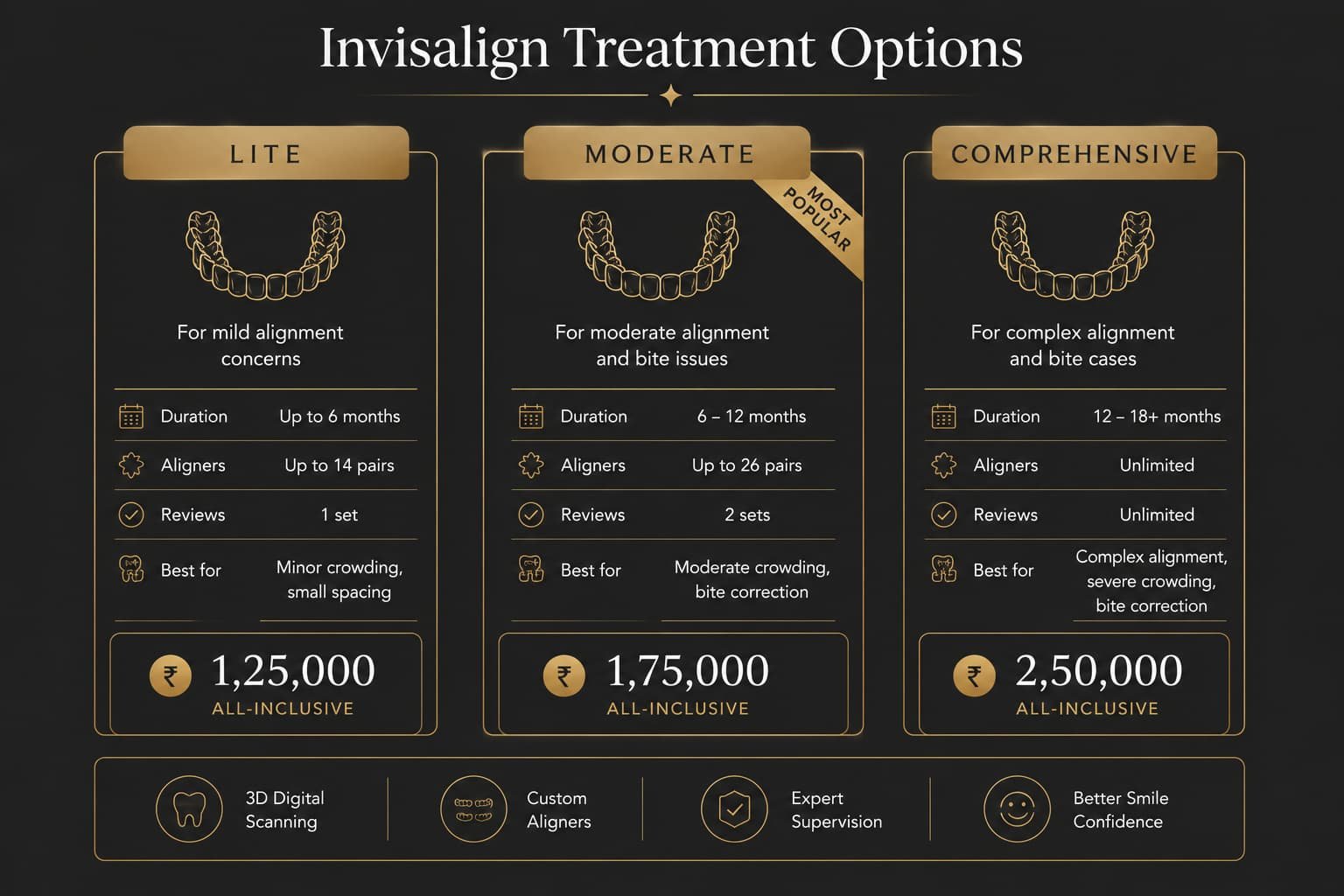
| Treatment Type | Typical Case | Approx. Cost (Chandigarh) | Duration |
|---|---|---|---|
| Invisalign Lite / Express | Minor crowding or spacing, small relapse after old braces | ₹1,50,000 – ₹1,80,000 | 4–7 months |
| Invisalign Moderate | Mild to moderate crowding, spacing or mild bite issues | ₹1,80,000 – ₹2,80,000 | 8–14 months |
| Invisalign Comprehensive / Full | Significant crowding, overbite, underbite or crossbite | ₹2,80,000 – ₹4,00,000 | 14–24 months |
These are typical market ranges for the Tricity region, not a fixed quote. Your own figure depends on the factors below — which is exactly why a good clinic will always examine you and take a scan before quoting.
What Determines the Price of Invisalign?
Invisalign is priced per case, and a handful of factors decide where you land. Understanding them helps you read a quote intelligently and avoid overpaying:
- Case complexity — the more your teeth need to move, the more aligners are designed, and the higher the lab fee.
- Treatment length and number of aligners — a 40-tray comprehensive case costs more than a 14-tray Lite case.
- The Invisalign package — Express, Lite, Moderate and Comprehensive are different products with different lab costs.
- Attachments and additional procedures — some cases need tooth-coloured attachments, elastics, or minor reshaping.
- Clinic expertise and technology — an experienced provider with an iTero scanner and careful planning charges for that skill, and it usually shows in the result.
- Refinements and retainers — good quotes include mid-course refinement aligners and post-treatment retainers; cheap ones often do not.
Is Invisalign more expensive than other clear aligners?
Usually, yes. Invisalign is the premium, most established brand, with the largest evidence base and the SmartTrack material. Other clear aligners — including good Indian brands — can cost less (often ₹60,000–₹1,50,000) and work well for straightforward cases. The right choice depends on your case complexity and what your dentist can predictably deliver, not the label alone.
What Is Invisalign and How Does It Work?
Invisalign is a system of clear, removable plastic aligners that gradually move your teeth into position. Instead of metal brackets and wires, you wear a series of custom trays, switching to the next set roughly every one to two weeks. Each tray is slightly different, nudging the teeth a fraction closer to the planned final position.
Because the aligners are nearly invisible and can be taken out to eat and brush, Invisalign has become the go-to choice for adults and older teens who want to straighten their teeth without the look of traditional braces.
The Invisalign Process, Step by Step
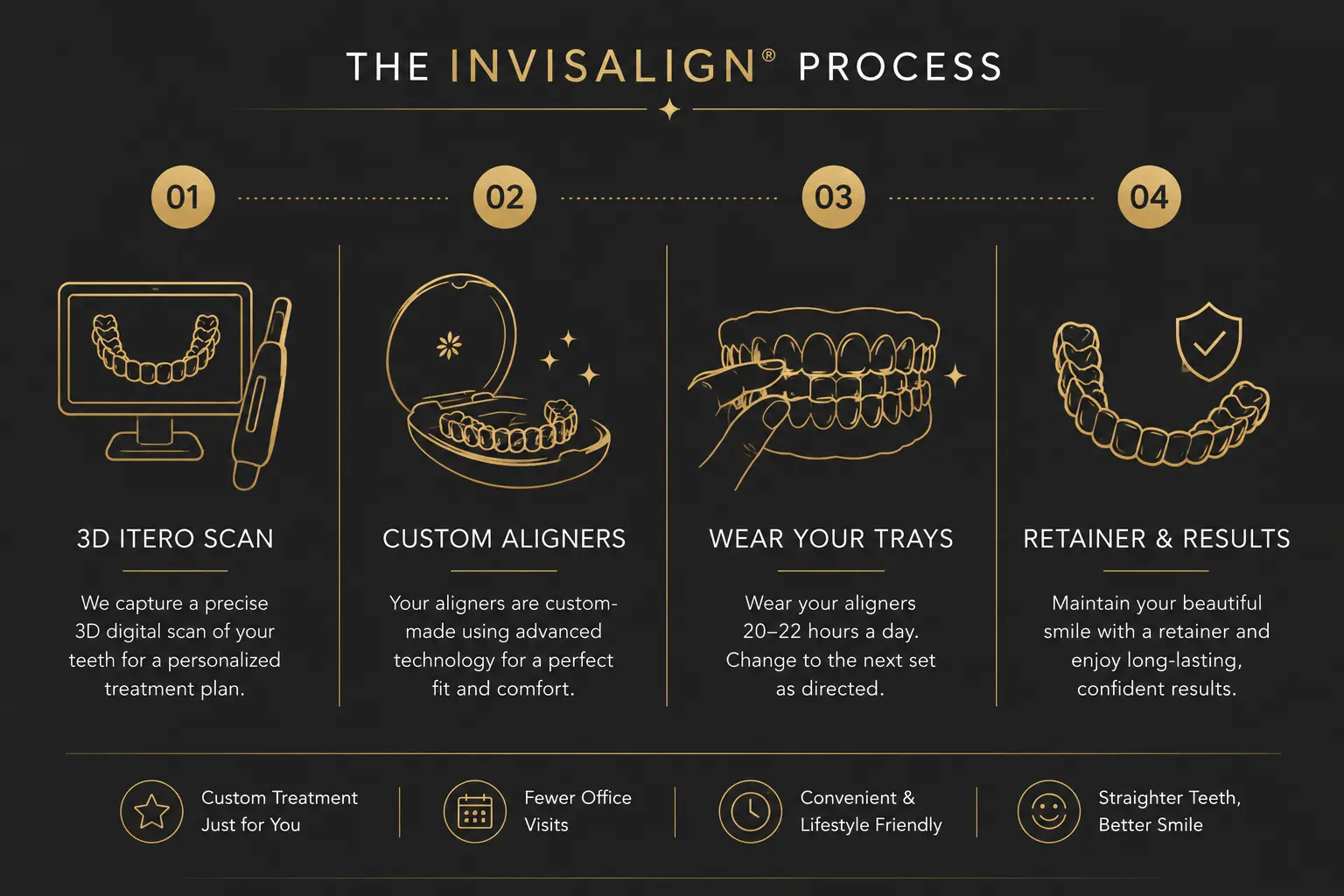
- Consultation and assessment. Your dentist checks your teeth, gums and bite and confirms whether Invisalign is right for your case.
- 3D digital scan. An iTero scanner captures a precise 3D model of your teeth — no messy impressions — and often shows a simulation of your likely result.
- Treatment planning. The scan goes to the Invisalign lab, where your full sequence of aligners is designed. You approve the plan before anything is made.
- Receiving your aligners. You collect your custom trays. If needed, small tooth-coloured attachments are bonded to certain teeth to help specific movements.
- Wearing and switching. You wear each set 20–22 hours a day, removing them only to eat, drink anything but water, and clean your teeth, and change to the next set every 1–2 weeks.
- Check-ups. Every 6–8 weeks your dentist reviews progress and hands over the next batch of aligners.
- Retainers. Once your teeth are straight, you wear retainers to hold them in place — this step is essential to protect your investment.
How Long Does Invisalign Take?
Most Invisalign treatments take 12 to 18 months, though it varies widely with your case. Simple cosmetic corrections can finish in as little as 6 months, while complex bite problems may take 18–24 months or more.
The single biggest factor within your control is wear time. Aligners only work while they are in your mouth, so wearing them the full 20–22 hours a day is what keeps treatment on schedule. Skipping wear is the most common reason cases run long.
Does Invisalign Hurt?
Invisalign is generally comfortable, but mild soreness in the first few days of each new tray is normal and expected. That tight, tender feeling is a sign the aligners are gently doing their job, and it usually settles within a day or two. Because there are no sharp brackets or wires, most people find Invisalign more comfortable than traditional braces overall.
If attachments are placed, your cheeks and tongue may take a few days to adjust. Any discomfort is typically managed with routine pain relief and passes quickly.
Invisalign vs Braces: Which Is Right for You?
Invisalign is ideal for mild to moderate cases and for people who value discretion; traditional braces are often better for complex or severe problems. Neither is universally "better" — the right choice depends on your teeth and your lifestyle.
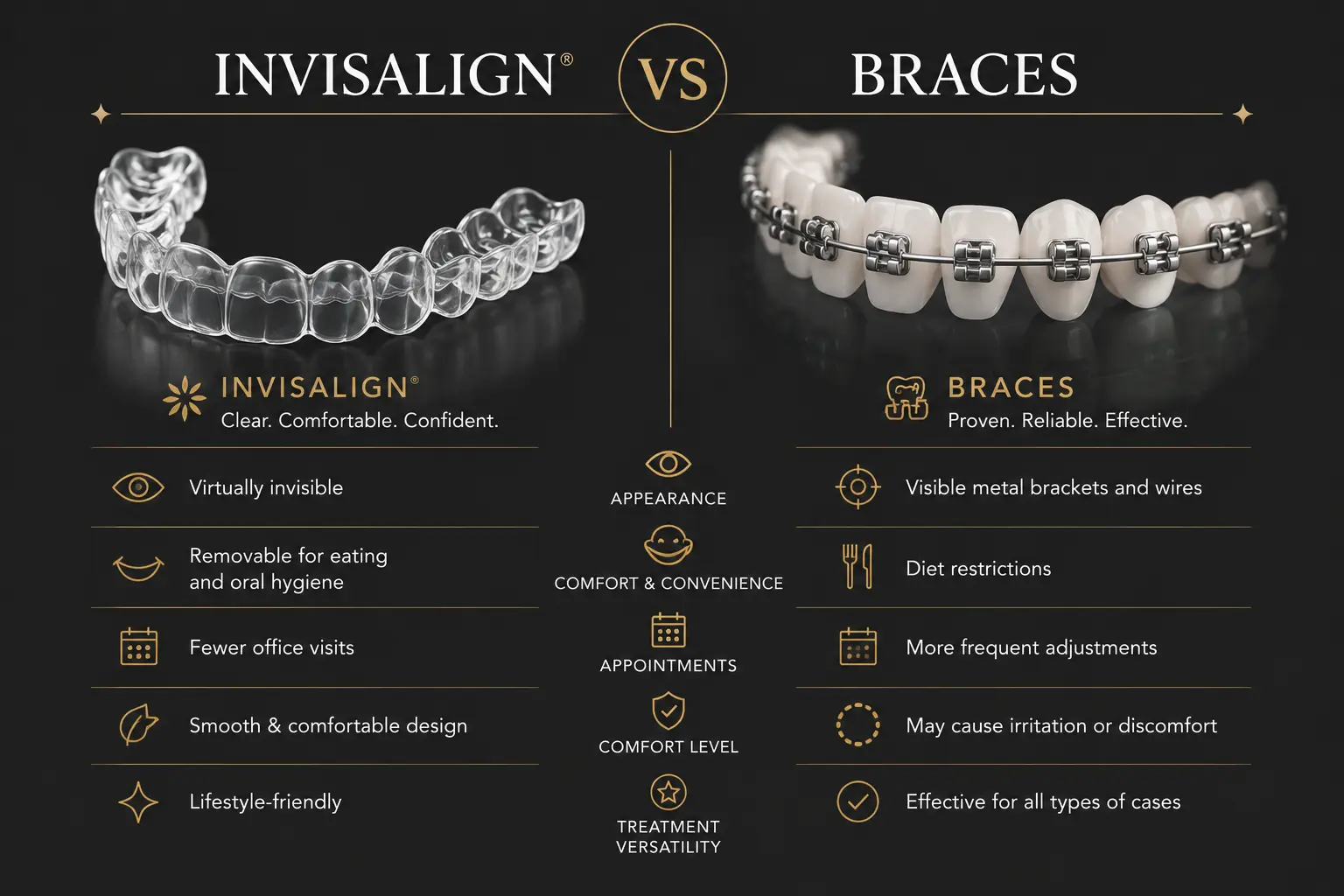
| Feature | Invisalign | Traditional Braces |
|---|---|---|
| Appearance | Nearly invisible | Visible metal brackets |
| Removable | Yes — for eating & cleaning | No — fixed on |
| Comfort | No wires or brackets | Can irritate cheeks/lips |
| Food restrictions | None (aligners removed) | Avoid hard/sticky foods |
| Best for | Mild to moderate cases | Complex/severe cases |
| Depends on discipline | Yes — must wear 20–22 hrs | Less — always working |
| Cleaning | Easy — brush normally | Harder around brackets |
Are You a Candidate for Invisalign?
Most adults and older teens with mild to moderate alignment problems are good candidates for Invisalign. It works well for crowding, spacing (gaps), and many overbite, underbite and crossbite cases. Final suitability, though, can only be confirmed by a clinical exam.
Invisalign usually works well if you:
- Have mild to moderate crowding or spacing.
- Have healthy teeth and gums (any decay or gum disease is treated first).
- Are disciplined enough to wear aligners 20–22 hours a day.
- Want a discreet, removable option.
Braces or specialist treatment may suit better if you:
- Have severe crowding, large rotations, or complex bite/jaw problems.
- Have active gum disease or untreated decay that needs attention first.
- Know you would struggle to wear removable aligners consistently.
Is Invisalign Worth the Cost?
For the right patient, Invisalign offers excellent value — but only when it is planned and delivered well. You are paying for a discreet, comfortable, removable system backed by advanced 3D planning and the most researched aligner brand available. The benefits many patients cite include:
- Confidence during treatment — almost no one notices the aligners.
- Easier hygiene — you brush and floss normally, with no brackets to work around.
- No diet restrictions — simply remove the trays to eat.
- Predictable planning — you often see a simulation of the result before you begin.
- A lasting result — provided you wear your retainers afterward.
The honest caveat: Invisalign is only as good as the discipline behind it. If aligners sit in their case instead of your mouth, no amount of money buys a straight smile.
How to Save on Invisalign Without Cutting Corners
- Get assessed early. Minor problems caught early may qualify for shorter, cheaper packages.
- Ask exactly what the price includes — scans, attachments, refinements and retainers should be spelled out.
- Ask about EMI or instalment plans, which many Chandigarh clinics offer.
- Consider a suitable clear-aligner alternative if your case is simple and your dentist agrees it will deliver the same result.
- Do not choose on price alone — a poorly planned cheap case that needs redoing is the most expensive option of all.
Common Mistakes to Avoid
- Comparing quotes without checking what is bundled into each.
- Not wearing aligners the full 20–22 hours, then wondering why treatment stalls.
- Losing trays (each replacement costs time and money).
- Skipping retainers afterward and letting teeth drift back.
- Choosing a provider purely on price rather than experience and planning.
Why Choose Pristine Dental for Invisalign in Chandigarh
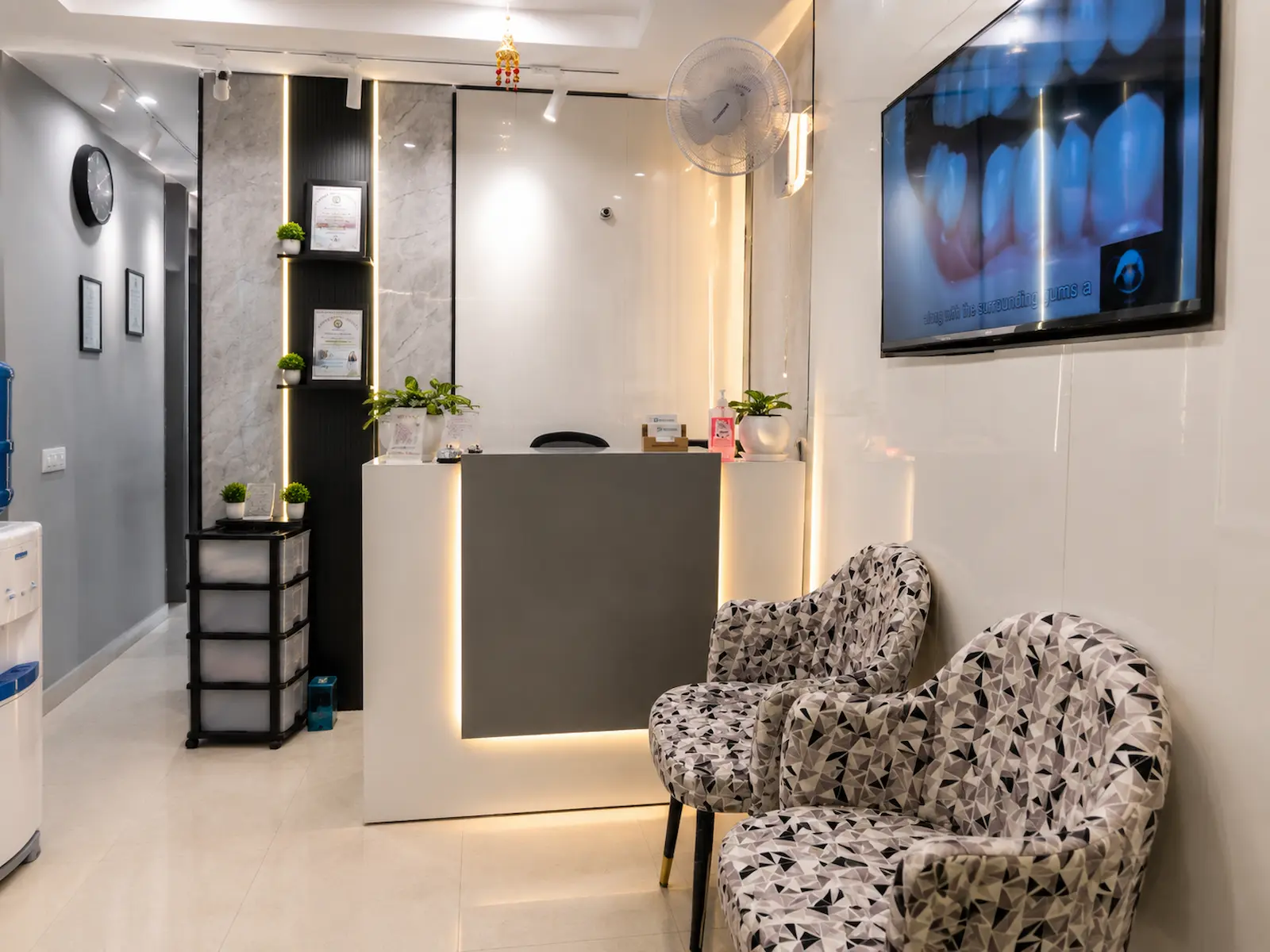
Pristine Dental is a modern, ethics-first practice at SCO 37, First Floor, Sector 19D, Chandigarh, offering Invisalign and clear aligner treatment to patients across Chandigarh, Mohali, Panchkula, Zirakpur, Kharar, New Chandigarh and the wider Tricity. We plan every case transparently and never over-promise.
- Digital 3D scanning for precise planning and a preview of your likely result.
- Honest case selection — we tell you if braces or an alternative aligner would serve you better.
- Transparent, all-inclusive quotes covering scans, aligners, refinements and retainers.
- Flexible payment options to make treatment manageable.
- Convenient for the whole Tricity, with easy access from Mohali, Panchkula and Zirakpur.
Frequently Asked Questions
How much does Invisalign cost in Chandigarh?
Invisalign in Chandigarh typically costs between ₹1,50,000 and ₹4,00,000. Short "Lite" cases start around ₹1,50,000–₹1,80,000, while comprehensive treatment for complex cases can reach ₹3,50,000–₹4,00,000. A precise quote requires a clinical exam and 3D scan.
Why is Invisalign more expensive than other aligners?
Invisalign is the premium, most researched aligner brand, using its SmartTrack material and advanced planning. Other clear aligners can cost less (often ₹60,000–₹1,50,000) and suit simple cases, but Invisalign is often chosen for predictability in more complex movements.
How long does Invisalign take?
Most cases take 12–18 months. Simple corrections can finish in about 6 months, while complex cases may take 18–24 months or longer. Wearing your aligners 20–22 hours a day keeps treatment on schedule.
Does Invisalign hurt?
Invisalign is generally comfortable. You may feel mild soreness for a day or two when you start each new tray — a normal sign the teeth are moving. There are no sharp wires or brackets, so most people find it easier than braces.
Is Invisalign as effective as braces?
For mild to moderate cases, Invisalign is highly effective. For severe crowding, large rotations or complex bite and jaw issues, traditional braces may give the orthodontist more control. Your dentist will advise which suits your case.
How many hours a day must I wear Invisalign?
You should wear your aligners 20–22 hours a day, removing them only to eat, drink anything other than water, and clean your teeth. Consistent wear is the key to finishing on time.
Can I eat with Invisalign in?
No — you remove the aligners to eat and drink (except water), then brush and put them back. This is actually an advantage, because there are no food restrictions during treatment.
Does the price include retainers?
It should, but always confirm. A good, transparent quote includes the 3D scan, all aligners, any attachments, mid-course refinements and post-treatment retainers. Cheaper quotes sometimes leave these out.
Are there payment or EMI plans for Invisalign?
Many clinics in Chandigarh, including Pristine Dental, offer instalment or EMI options to spread the cost. Ask during your consultation.
Can teenagers get Invisalign?
Yes. Invisalign Teen is designed for younger patients, provided they are disciplined about wearing the aligners. Your dentist will assess whether it suits the individual case.
What happens if I lose an aligner?
Tell your dentist promptly. Depending on your progress, you may move to the next tray or order a replacement. Losing aligners can add cost and delay, so a safe storage habit matters.
Will my teeth move back after Invisalign?
They can, if you do not wear retainers. Teeth naturally tend to drift, so wearing your retainers as advised is essential to keep your new smile straight for the long term.
When to Book a Consultation
If you are considering straightening your teeth, the best first step is a consultation and 3D scan. Only then can anyone give you an accurate cost, a realistic timeline, and an honest opinion on whether Invisalign, another aligner, or braces will serve you best. There is no obligation in simply finding out where you stand.
Conclusion
Invisalign in Chandigarh generally costs ₹1.5–4 lakh, with the final figure set by how much your teeth need to move and how long treatment takes. It is a premium, comfortable, discreet way to straighten teeth — and for the right patient, excellent value. The keys to a good outcome are simple: honest case selection, a transparent all-inclusive quote, an experienced provider, and your own commitment to wearing the aligners. As with any treatment, decisions should be based on a clinical examination rather than an online price range, because every smile is different.
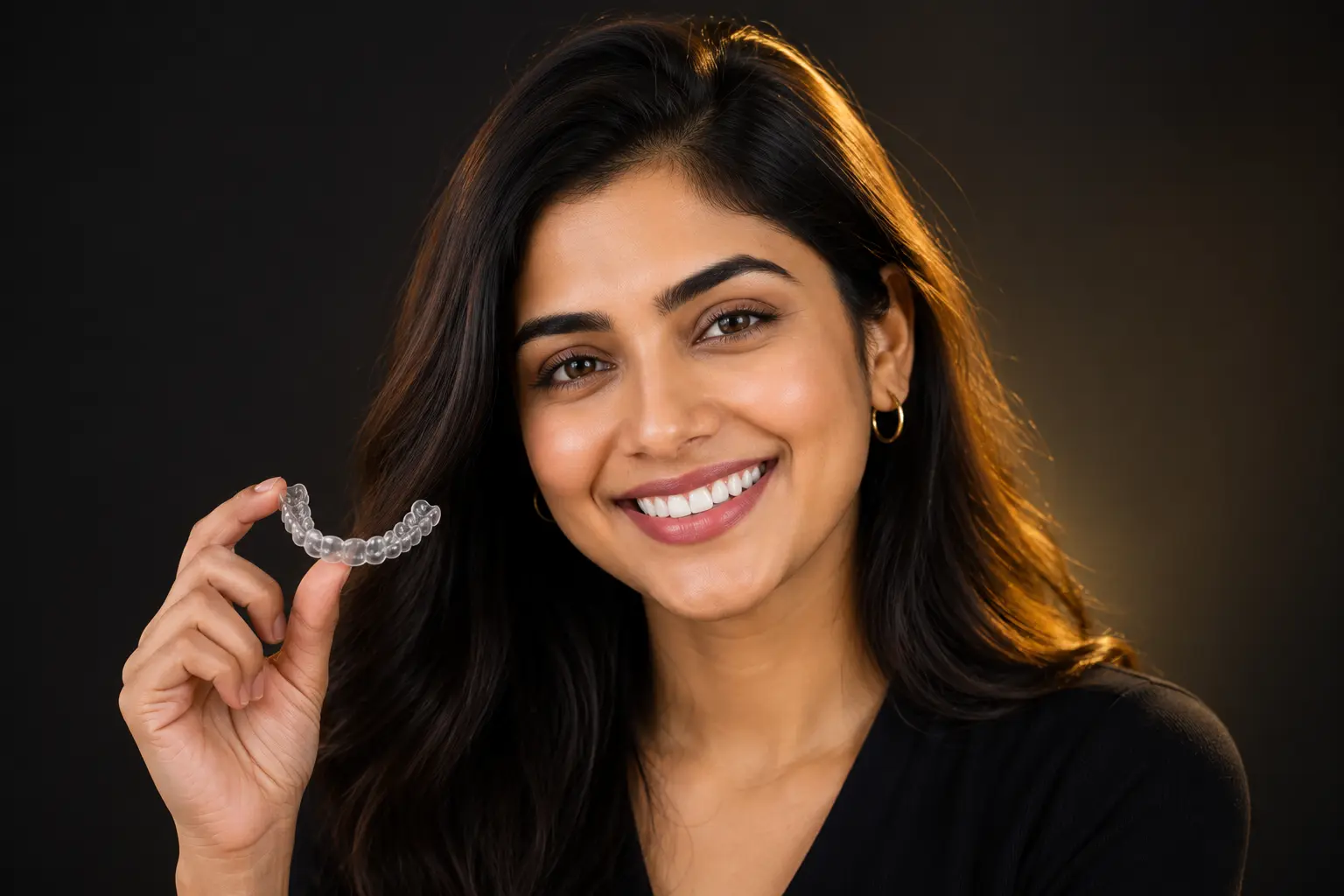
Curious what Invisalign would cost for you?
Book a consultation and 3D scan at Pristine Dental, SCO 37, First Floor, Sector 19D, Chandigarh. We'll assess your teeth and give you a clear, honest, all-inclusive quote — with no pressure. Serving Chandigarh, Mohali, Panchkula, Zirakpur and the wider Tricity.
Book Your Consultation
Periodontist & implantologist with 14+ years' experience at Pristine Dental, Sector 19D, Chandigarh. Reviews clinical content for accuracy.