

Invisalign vs Braces in Chandigarh: Which Is Right for You?
Quick Answer
Choose Invisalign if you want a near-invisible, removable and comfortable option for mild to moderate alignment issues, and you can commit to wearing the aligners 20–22 hours a day — treatment averages 12–18 months. Choose braces for the most reliable correction of complex crowding, big rotations and bite problems, or if you'd rather not depend on remembering to wear a removable appliance — treatment averages 18–24 months. In Chandigarh, braces cost roughly ₹25,000–₹70,000 and Invisalign ₹1,50,000–₹3,50,000.
Straightening your teeth is one of the best investments you can make in your smile and your long-term dental health — but the first decision is usually "Invisalign or braces?" Both move teeth into place effectively; they simply do it in different ways, with different trade-offs in looks, comfort, cost and what kinds of problems they handle best. This guide, written by a practising dentist, compares them honestly so patients in Chandigarh, Mohali, Panchkula and Zirakpur can choose the right path with confidence.
Key Takeaways
- Invisalign is near-invisible, removable and comfortable — best for mild to moderate cases.
- Braces are fixed and the most reliable for complex crowding and bite problems.
- Treatment time: Invisalign 12–18 months vs braces 18–24 months on average.
- Cost in Chandigarh: braces ₹25,000–₹70,000; Invisalign ₹1,50,000–₹3,50,000.
- Invisalign needs discipline — 20–22 hours of wear a day to work.
- Braces work around the clock — nothing to remember to put back in.
What Are Invisalign and Braces?
Both gradually move teeth into a straighter position — the difference is how.
Invisalign (clear aligners)
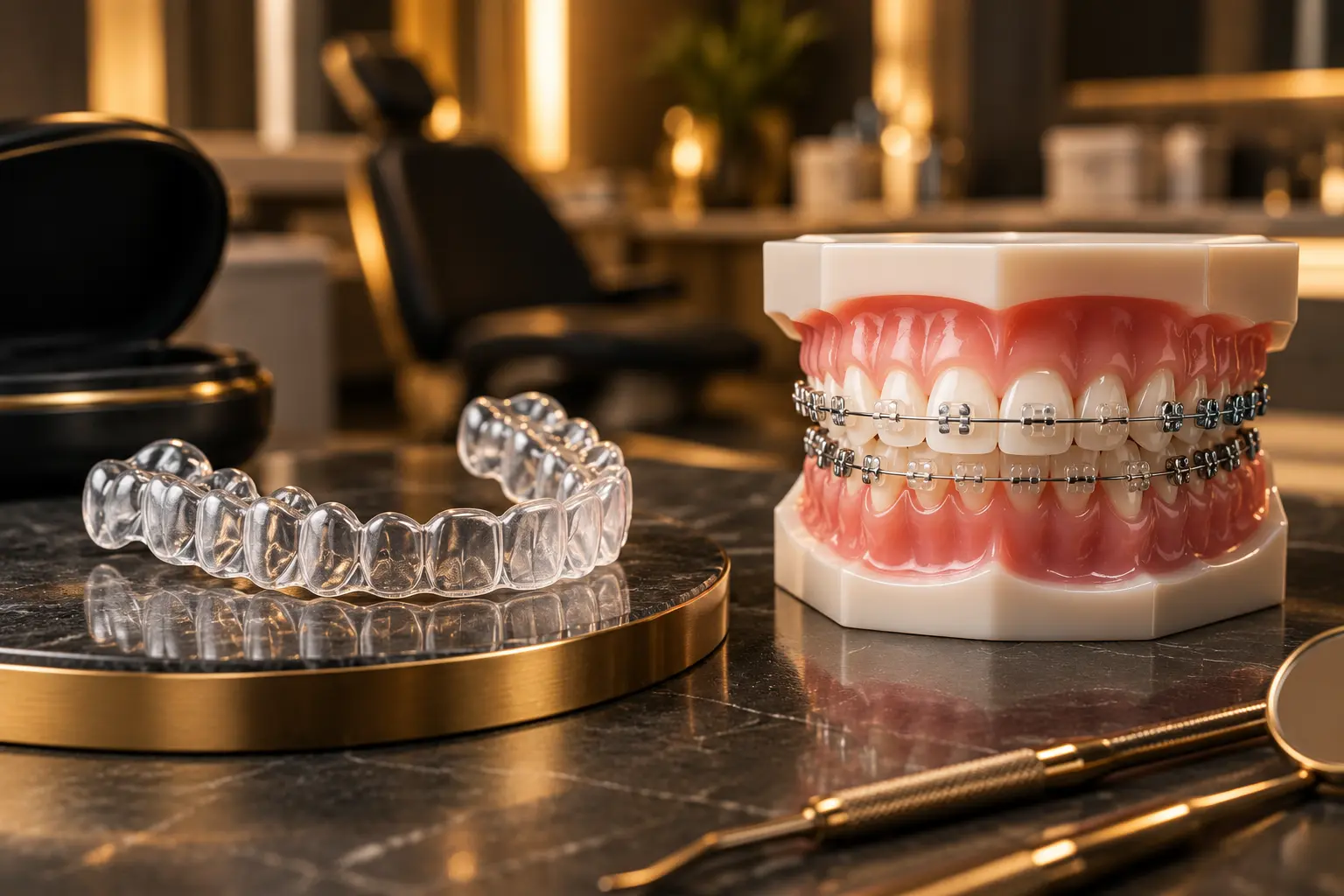
A series of custom-made, transparent plastic trays that you change roughly every one to two weeks. Each tray shifts your teeth a little closer to the target. They are removable and nearly invisible. Explore our clear aligners options.
Traditional braces
Metal (or tooth-coloured ceramic) brackets bonded to each tooth, connected by a wire that the orthodontist adjusts over time. They are fixed in place and work continuously. See our braces treatments.
Invisalign vs Braces: Side-by-Side
Here is how the two compare across what matters most.
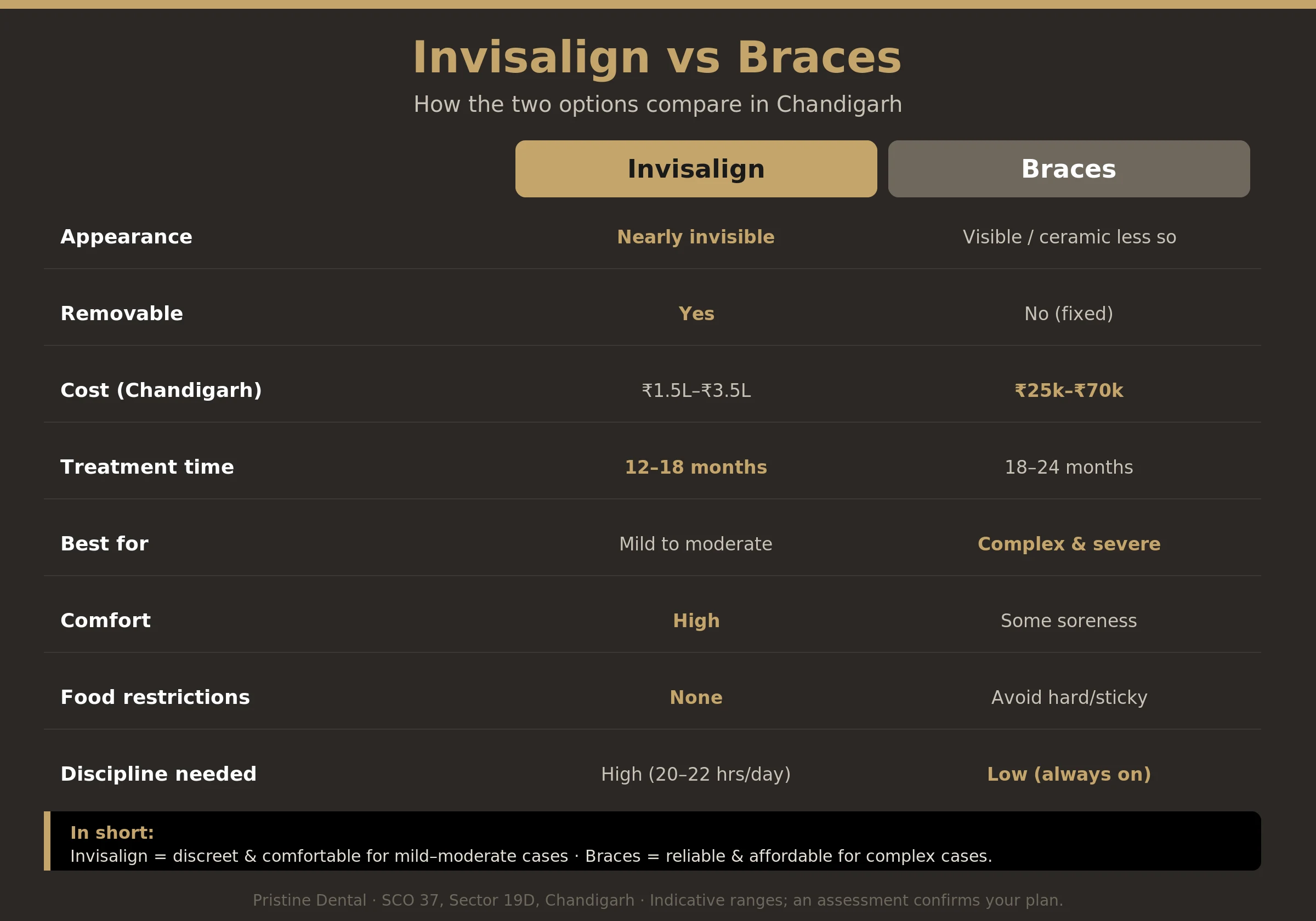
| Factor | Invisalign | Braces |
|---|---|---|
| Appearance | Nearly invisible | Visible (metal) / less so (ceramic) |
| Removable | Yes — for eating & cleaning | No — fixed on |
| Cost (Chandigarh) | ₹1,50,000–₹3,50,000 | ₹25,000–₹70,000 |
| Average treatment time | 12–18 months | 18–24 months |
| Best for | Mild to moderate cases | Complex & severe cases |
| Comfort | Smooth, minimal irritation | Can cause soreness & wire cuts |
| Food restrictions | None (trays removed) | Avoid hard, sticky foods |
| Discipline needed | High — 20–22 hrs/day | Low — always working |
| Cleaning | Brush & floss normally | Careful cleaning around brackets |
These are typical ranges for the Tricity, not a fixed quote. The exact figure and timeline depend on how much your teeth need to move. For a full price breakdown, see our guide to the cost of Invisalign in Chandigarh.
Appearance: How Noticeable Is Each?
Invisalign wins clearly on discretion. The clear trays are very hard to spot, which is why so many adults and working professionals choose them — many patients say no one noticed they were in treatment. Braces are more visible, though tooth-coloured ceramic brackets are a less obvious option than metal. If looking "brace-free" during treatment is a top priority for you, Invisalign is usually the better fit.
Comfort and Daily Life
Invisalign is generally more comfortable and fits more easily into daily life. The smooth trays cause little irritation, and because you remove them to eat, there are no food restrictions and brushing and flossing stay simple. Braces can cause soreness after adjustments and the occasional wire or bracket rubbing, and you need to avoid hard, sticky and crunchy foods to protect them. The flip side: braces ask nothing of your memory, while Invisalign only works if you actually wear it.
Effectiveness: Which Works Better?
Both straighten teeth very effectively — the right choice depends on the complexity of your case. Invisalign works beautifully for mild to moderate crowding, spacing, and many bite issues, and can be faster for these. Braces give the orthodontist more mechanical control, which makes them more reliable for severe crowding, large tooth rotations, and bite problems that come from jaw position rather than just tooth position. A good orthodontist will tell you honestly whether your case is better suited to one or the other.
Treatment Time and Cost
Invisalign is often a little faster but costs more; braces take a bit longer but are more affordable. On average, Invisalign takes 12–18 months and braces 18–24 months, though complex cases can run longer with either. On cost, metal braces are the most economical at roughly ₹25,000–₹50,000 in Chandigarh, ceramic braces a little more, and Invisalign the premium option at around ₹1,50,000–₹3,50,000. The gap reflects the custom technology behind clear aligners — so your decision often balances budget against discretion and comfort.
The Discipline Factor
This is the single most important thing to be honest with yourself about. Invisalign only moves your teeth while you are wearing it — it needs 20 to 22 hours a day, taken out only for meals and cleaning. Wear them less and treatment slows down, trays stop fitting, and months can be added to your timeline. Braces remove that risk entirely because they are fixed on and work around the clock. If you know you might forget to put trays back in, or you want a "fit and forget" option, braces may serve you better despite being more visible.
Which Should You Choose?
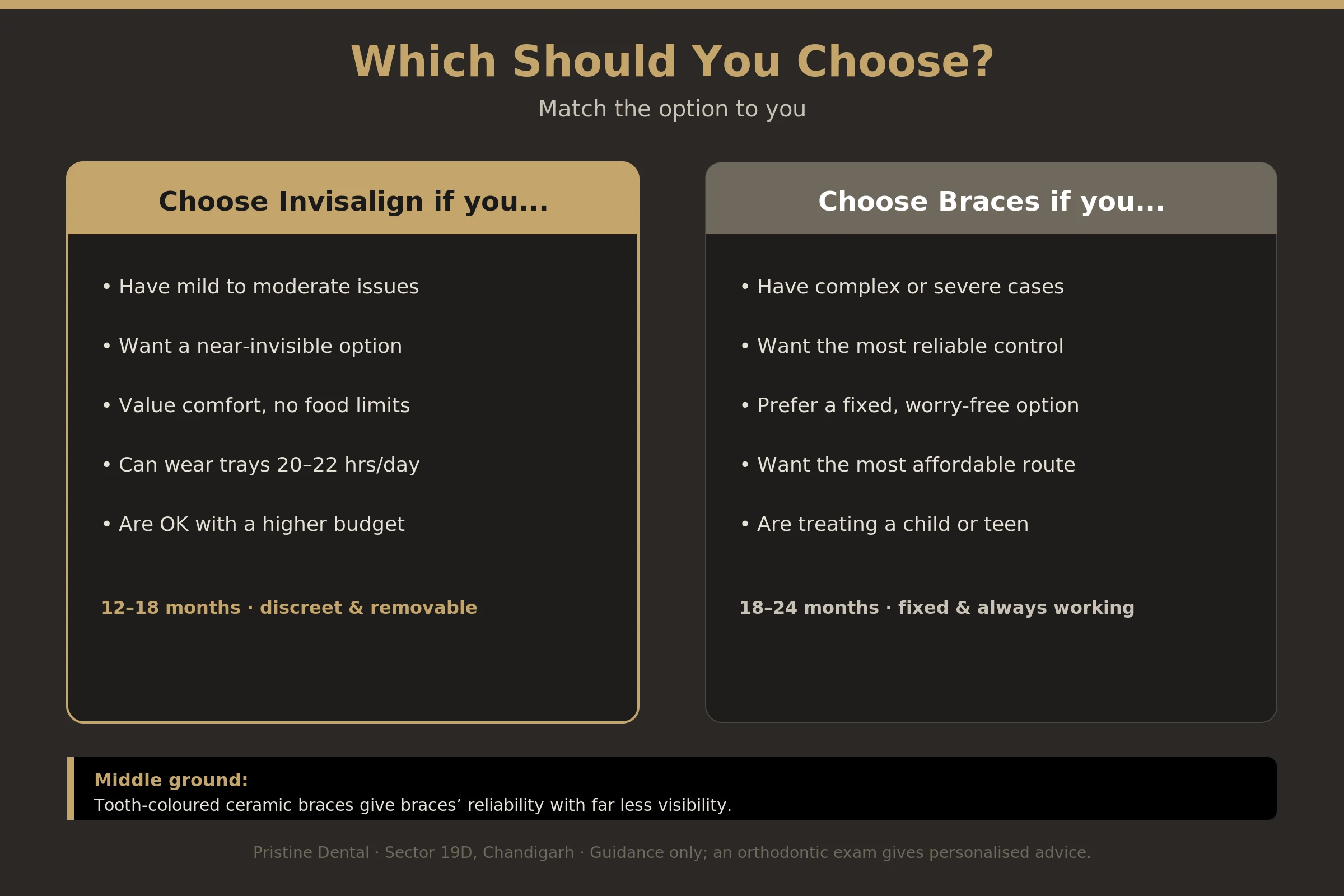
Invisalign may be right for you if you:
- Have mild to moderate crowding, spacing or bite issues.
- Want a near-invisible option — ideal for adults and professionals.
- Value comfort and no food restrictions.
- Can reliably wear the trays 20–22 hours a day.
- Are comfortable with a higher budget for the convenience.
Braces may be right for you if you:
- Have complex or severe crowding, rotations or bite problems.
- Want the most reliable, orthodontist-controlled correction.
- Prefer a "fixed and always working" option with no wear discipline.
- Want the most affordable route to straight teeth.
- Are treating a child or teen who may not keep trays in.
The honest bottom line
For many mild to moderate adult cases, Invisalign is a wonderful fit. For complex corrections, growing children, or anyone who wants a worry-free option, braces are often the smarter choice. The only way to know for sure is an assessment of your teeth and bite.
What About Ceramic Braces and Other Options?
It is not strictly a two-way choice. If you like the reliability of braces but want them less visible, tooth-coloured ceramic braces blend in far better than metal while offering the same fixed control. There are also other clear-aligner brands besides Invisalign. The best approach is to discuss all the options for your case — sometimes the ideal plan is a combination, or starting with one approach and refining with another. A full smile makeover may also combine alignment with whitening or veneers for a complete result.
Invisalign or Braces for Children and Teens?
For younger patients, the deciding factor is usually responsibility, not just the case. Invisalign (and Invisalign Teen) can work well for motivated teenagers who will reliably keep the aligners in for 20–22 hours a day and not lose them. For children and teens who may forget, misplace trays, or simply won't wear them consistently, fixed braces are the more dependable choice because they are always working. Many orthodontists also prefer braces for growing patients with developing bites, where precise control matters. A consultation that considers both the bite and the child's habits gives the clearest answer.
After Treatment: Retainers and Keeping Teeth Straight
With both Invisalign and braces, the result is only permanent if you wear a retainer afterwards. Teeth have a natural tendency to drift back towards their old positions, so once your teeth are straight, a retainer holds them in place. This may be a clear removable retainer worn at night, or a thin fixed wire bonded behind the front teeth. Wearing your retainer as directed is the single most important thing you can do to protect your investment — it keeps the smile you worked months to achieve looking great for years.
Why Choose Pristine Dental in Chandigarh
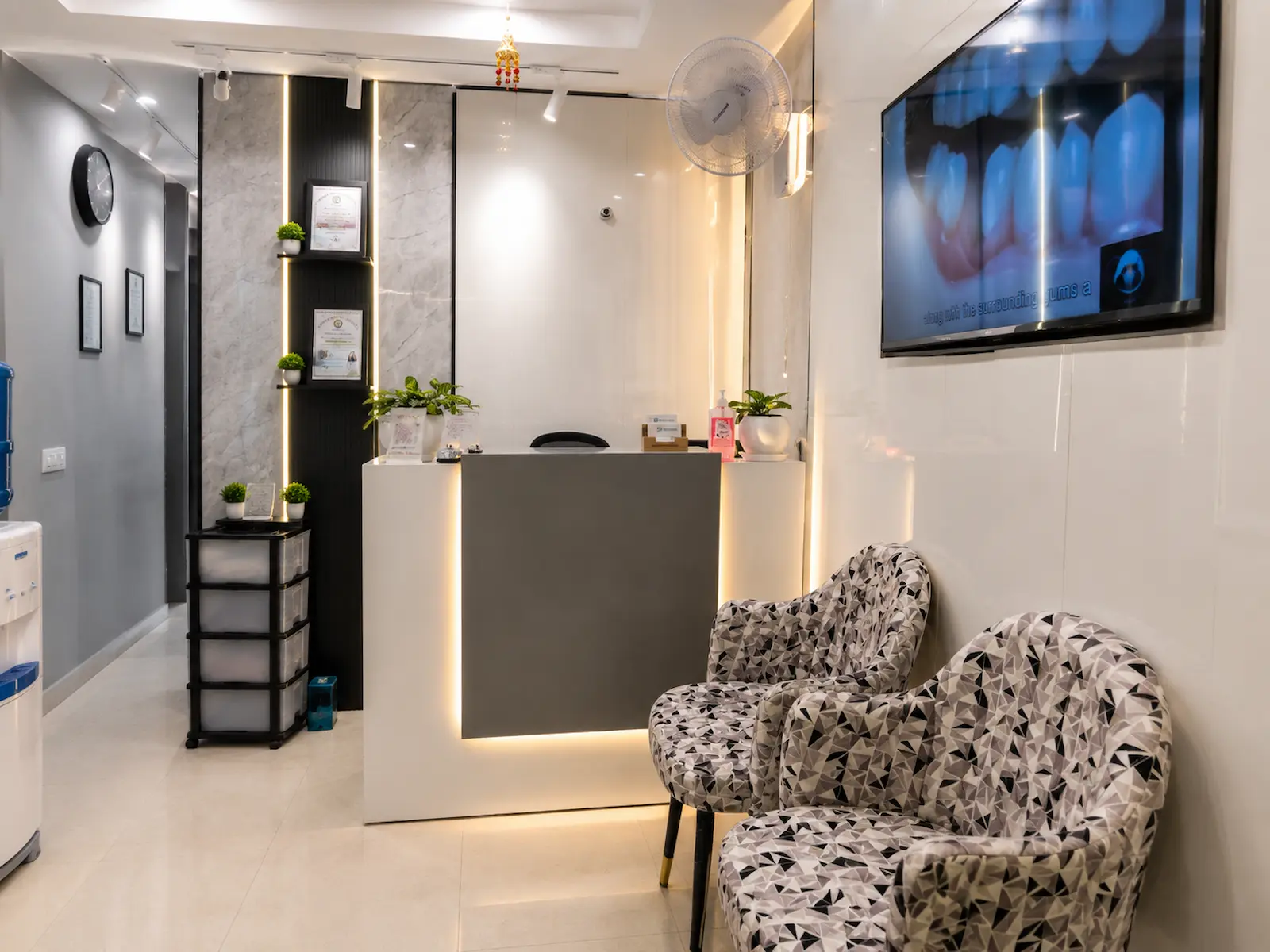
Pristine Dental is a modern, ethics-first practice at SCO 37, First Floor, Sector 19D, Chandigarh, caring for patients across Chandigarh, Mohali, Panchkula, Zirakpur, Kharar, New Chandigarh and the wider Tricity. We recommend Invisalign or braces based on your teeth and goals — not a one-size-fits-all answer.
- A proper orthodontic assessment to judge what will work best for your case.
- Invisalign, clear aligners, ceramic and metal braces — all options explained.
- Digital planning so you can preview your result before you commit.
- Honest advice on cost, timeline and discipline for each option.
- Open seven days a week, convenient for the whole Tricity.
Frequently Asked Questions
Is Invisalign better than braces?
Neither is universally better. Invisalign is near-invisible, removable and comfortable and suits mild to moderate cases, while braces are more reliable for complex crowding and bite problems. The best choice depends on your case, budget and discipline.
Which is cheaper, Invisalign or braces?
Braces are more affordable — roughly ₹25,000–₹70,000 in Chandigarh — while Invisalign costs around ₹1,50,000–₹3,50,000. The higher Invisalign price reflects its custom clear-aligner technology.
Which is faster, Invisalign or braces?
On average Invisalign is a little faster (12–18 months) than braces (18–24 months) for comparable cases, but braces can be quicker for very complex problems. Your timeline depends on how much your teeth need to move.
Do braces work better for complex cases?
Yes. Braces give the orthodontist more mechanical control, making them more reliable for severe crowding, large rotations and bite problems that come from jaw position. Invisalign excels at mild to moderate cases.
How many hours a day do I wear Invisalign?
You need to wear the aligners 20 to 22 hours a day, removing them only to eat, drink anything other than water, and clean your teeth. Wearing them less slows treatment and can add months.
Are braces or Invisalign more comfortable?
Invisalign is generally more comfortable, as the smooth trays cause little irritation. Braces can feel sore after adjustments and occasionally rub, though this settles and is manageable.
Can I eat normally with each?
With Invisalign you remove the trays to eat, so there are no food restrictions. With braces you need to avoid hard, sticky and crunchy foods that could damage the brackets or wires.
Is Invisalign suitable for teenagers?
It can be, if the teen is responsible about wearing the aligners for 20–22 hours a day. For children and teens who may not keep trays in, braces are often the more dependable choice.
Which is easier to keep clean?
Invisalign, because you remove the trays and brush and floss normally. Braces need careful cleaning around the brackets and wires to avoid plaque build-up and staining.
Are ceramic braces a good middle option?
Yes. Tooth-coloured ceramic braces are far less visible than metal while keeping the fixed, reliable control of traditional braces — a popular middle ground for those who want discretion without aligners.
Will I need a retainer afterwards?
Yes, with both. After treatment you wear a retainer to keep your teeth in their new position, as teeth naturally tend to drift back without one.
How do I know which is right for me?
An orthodontic consultation is the best way. Your dentist assesses your teeth, bite and goals, and recommends Invisalign, braces or an alternative — with an honest view of cost, time and discipline.
When to See a Dentist
If your teeth are crowded, gapped, crooked, or your bite doesn't meet comfortably, an orthodontic consultation is the best first step. A dentist will examine your teeth and bite, discuss your goals, lifestyle and budget, and show you — often with digital planning — what each option would achieve. Straightening teeth also makes them easier to clean and healthier long-term, so it is worth more than just appearance. Book a consultation to find out whether Invisalign or braces suits you best.
Conclusion
Invisalign and braces are both excellent ways to a straighter, healthier smile — the right one depends on you. Invisalign offers discretion, comfort and convenience for mild to moderate cases, provided you wear it faithfully. Braces offer unmatched reliability for complex corrections and a more affordable, worry-free path. There is no universally "best" option, only the best one for your teeth, your lifestyle and your budget — and that is exactly what a proper assessment reveals. Whichever you choose, straightening your teeth is a decision your smile will thank you for.
Invisalign or braces? Let's find your best fit.
Book an orthodontic consultation at Pristine Dental, SCO 37, First Floor, Sector 19D, Chandigarh. We'll assess your teeth and bite, explain both options honestly, and plan the right path — with no pressure. Serving Chandigarh, Mohali, Panchkula, Zirakpur and the wider Tricity.
Book Your Consultation
Periodontist & implantologist with 14+ years' experience at Pristine Dental, Sector 19D, Chandigarh. Reviews clinical content for accuracy.