


✔ Medically reviewed by
Dr. Nakul Singla, MDS
— Periodontist & Implantologist, Pristine Dental, Chandigarh
Last reviewed: September 2026
Dental Implants in Chandigarh: A Complete Guide
Quick Answer
Dental implants are titanium posts placed in the jawbone to permanently replace missing teeth. In Chandigarh, a single tooth implant typically costs ₹20,000–₹50,000, and full-mouth implants range from ₹3,00,000–₹8,00,000 per arch depending on the system used. The full process takes 3–9 months because the implant must fuse with the bone (osseointegration). With proper care, implants have a 10-year success rate of 95–98%, making them the most durable tooth-replacement option available.
If you have lost a tooth — or several — you are far from alone. The World Health Organization estimates that oral diseases affect close to 3.5 billion people globally, and complete tooth loss affects around 23% of people aged 60 and over. Missing teeth are not just a cosmetic concern; they change how you chew, speak, and even how your face is shaped over time. This guide explains everything a patient in Chandigarh, Mohali, Panchkula, or Zirakpur needs to know before choosing dental implants, written from the perspective of a practising implant dentist.
Key Takeaways
- Implants replace the root, not just the crown — this preserves jawbone and prevents the “sunken” look that follows tooth loss.
- Cost in Chandigarh ranges from ₹20,000–₹50,000 for a single tooth to ₹3–8 lakh per arch for full-mouth reconstruction.
- Success rates are excellent — 95–98% at 10 years, with large studies showing ~96.8% survival at 10 years.
- The process takes 3–9 months, mostly spent waiting for the implant to fuse with bone.
- Most patients are candidates, but smoking, uncontrolled diabetes, and low bone volume need to be managed first.
- A clinical examination and a CBCT scan are essential — no honest quote or plan can be given without them.
What Are Dental Implants?
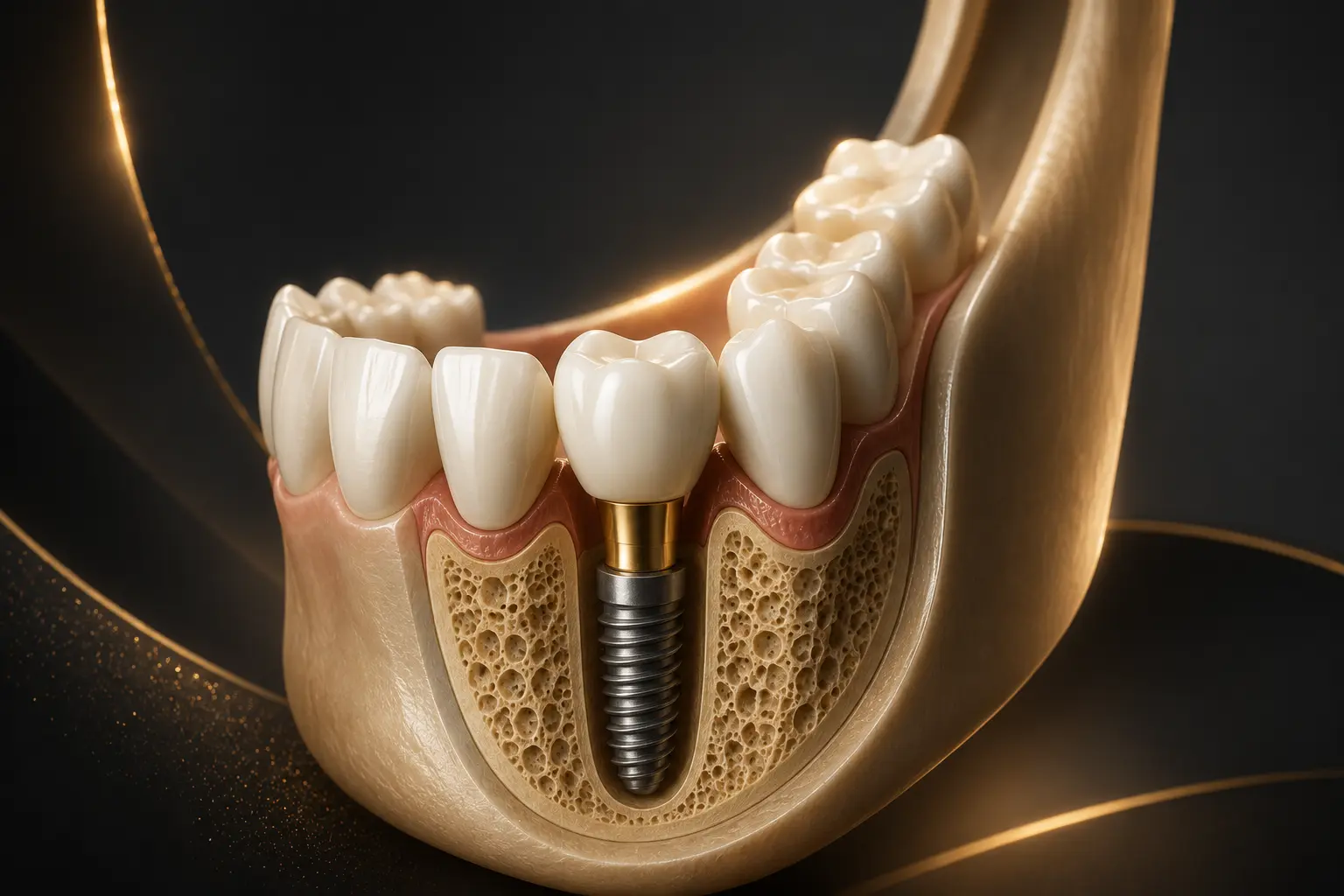
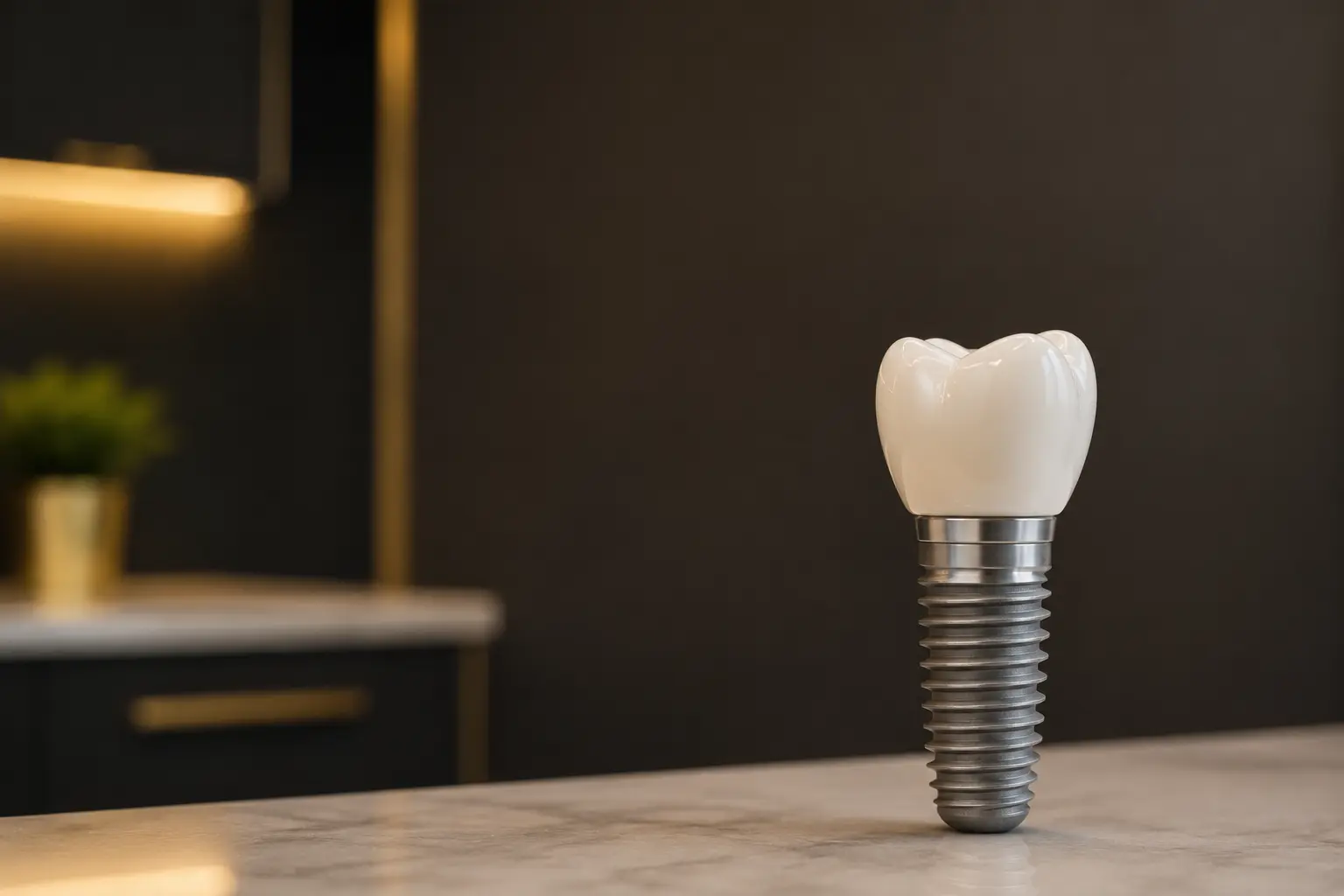
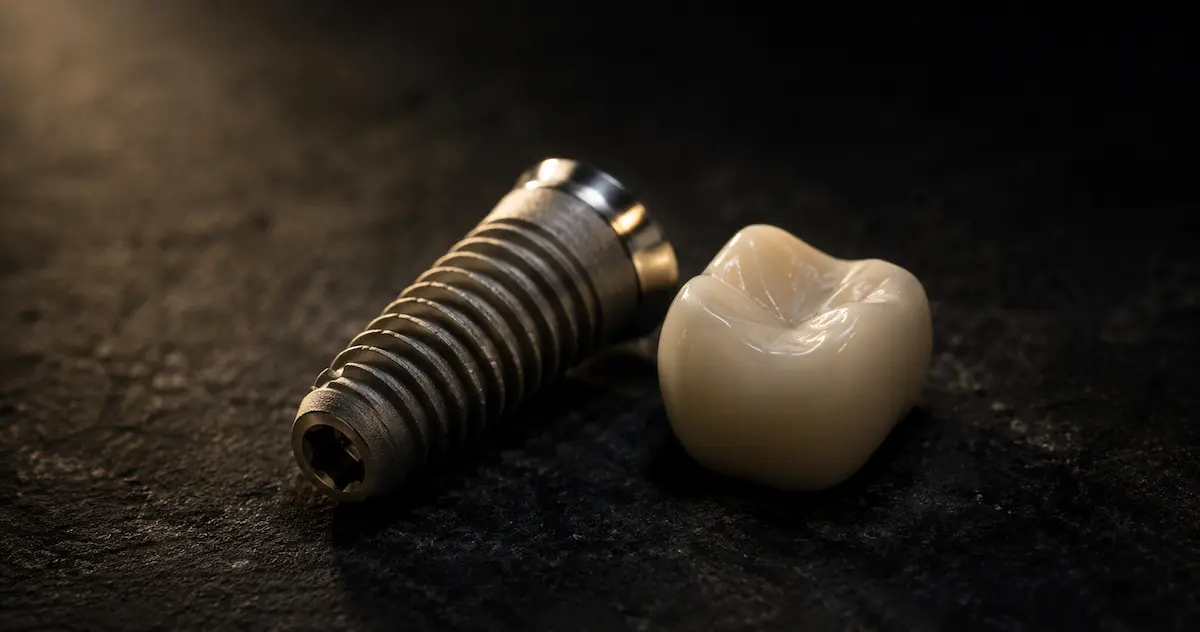
A dental implant is a small titanium screw that acts as an artificial tooth root. It is placed into the jawbone, where it bonds with the bone over a few months. Once fused, it supports a crown, bridge, or denture that looks and works like a natural tooth.
Every complete implant has three parts:
- The implant (fixture) — the titanium post placed in the bone. Titanium is used because it is biocompatible, meaning the body accepts it and bone grows directly onto its surface.
- The abutment — a small connector that sits on top of the implant and links it to the visible tooth.
- The crown (or bridge/denture) — the custom-made, tooth-coloured part you actually see and chew with, usually made of zirconia or porcelain.
Unlike a bridge, an implant does not rely on grinding down the healthy teeth next to the gap. Unlike a removable denture, it stays fixed in your mouth and does not slip while you eat or speak. This is why implants are widely considered the gold standard for replacing missing teeth. Learn more about our full mouth dental implants and zirconia crowns.
Why Replacing a Missing Tooth Matters
Leaving a gap is rarely harmless. When a tooth is lost, the jawbone that used to support it begins to shrink — a process called resorption. Over months and years this leads to several problems that quietly get worse:
- Bone loss in the jaw, which can change your facial profile and make future treatment harder.
- Neighbouring teeth drift into the empty space, throwing off your bite and making cleaning difficult.
- The opposing tooth over-erupts because it has nothing to bite against.
- Chewing shifts to one side, which can strain the jaw joint and wear teeth unevenly.
- Speech and confidence are affected, especially when front teeth are involved.
An implant is the only tooth-replacement option that also replaces the root, which is why it is uniquely good at preserving bone. This single fact is the reason many dentists recommend acting sooner rather than later.
Types of Dental Implant Treatments
The right option depends on how many teeth are missing and the condition of your jawbone. Here are the treatments we most commonly plan for patients in the Tricity region.
Single Tooth Implant
One implant and one crown replace a single missing tooth without touching the teeth on either side. It is the most conservative and long-lasting way to fill a single gap.
Multiple Teeth / Implant-Supported Bridge
When several teeth in a row are missing, two or more implants can support a fixed bridge — avoiding the need for one implant per tooth while still keeping everything permanently in place. See our dental bridges page.
Full-Mouth / All-on-4 & All-on-6
For patients missing all or most teeth in a jaw, a full arch of fixed teeth can be supported on just four to six implants. This is a life-changing option for people struggling with loose dentures, and often lets them eat comfortably again.
Implant-Supported Dentures (Overdentures)
A removable denture that clips onto two or more implants. It costs less than a full fixed arch, stops the denture from slipping, and is easy to clean. Compare with conventional dentures.
Implants vs Other Options: A Quick Comparison
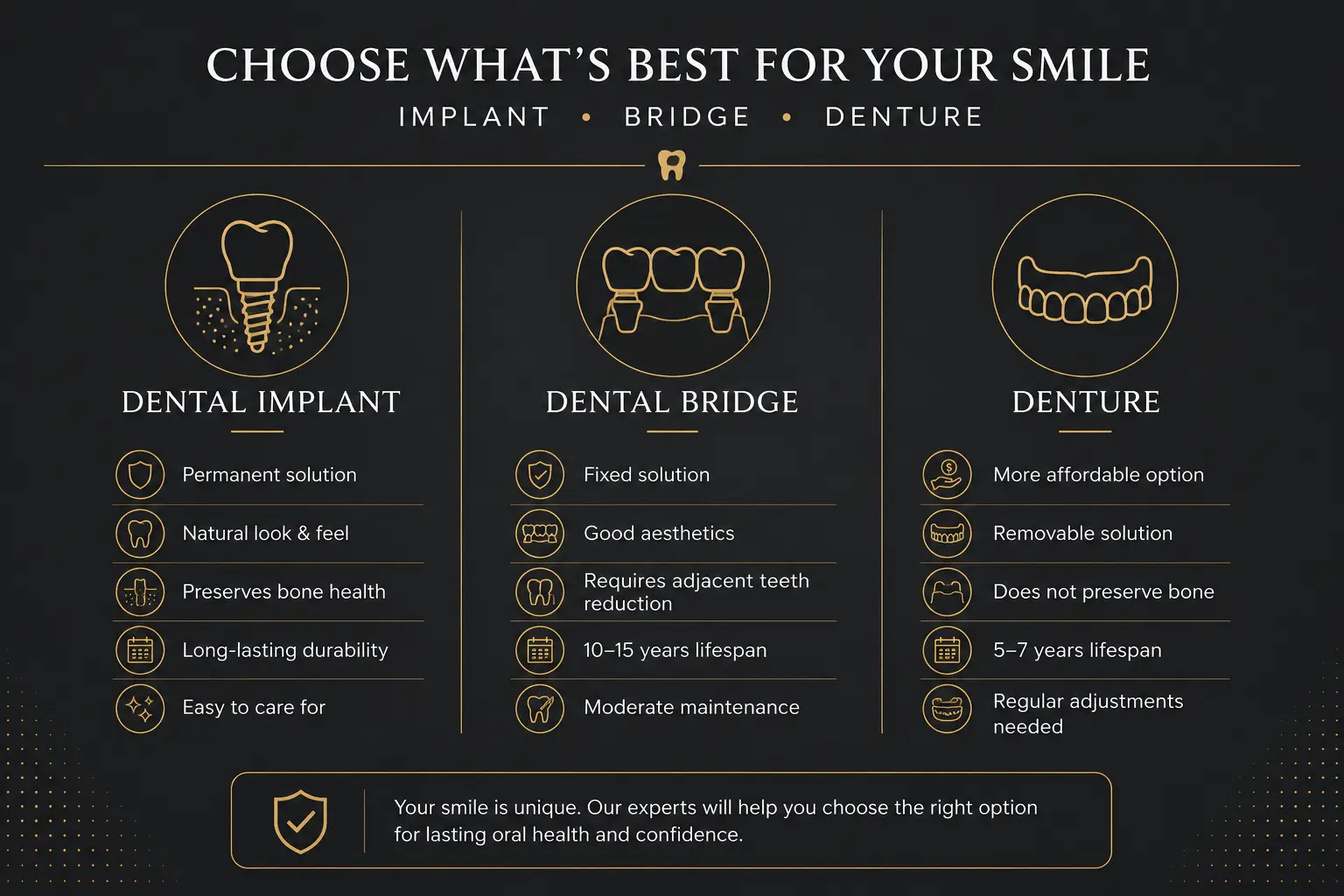
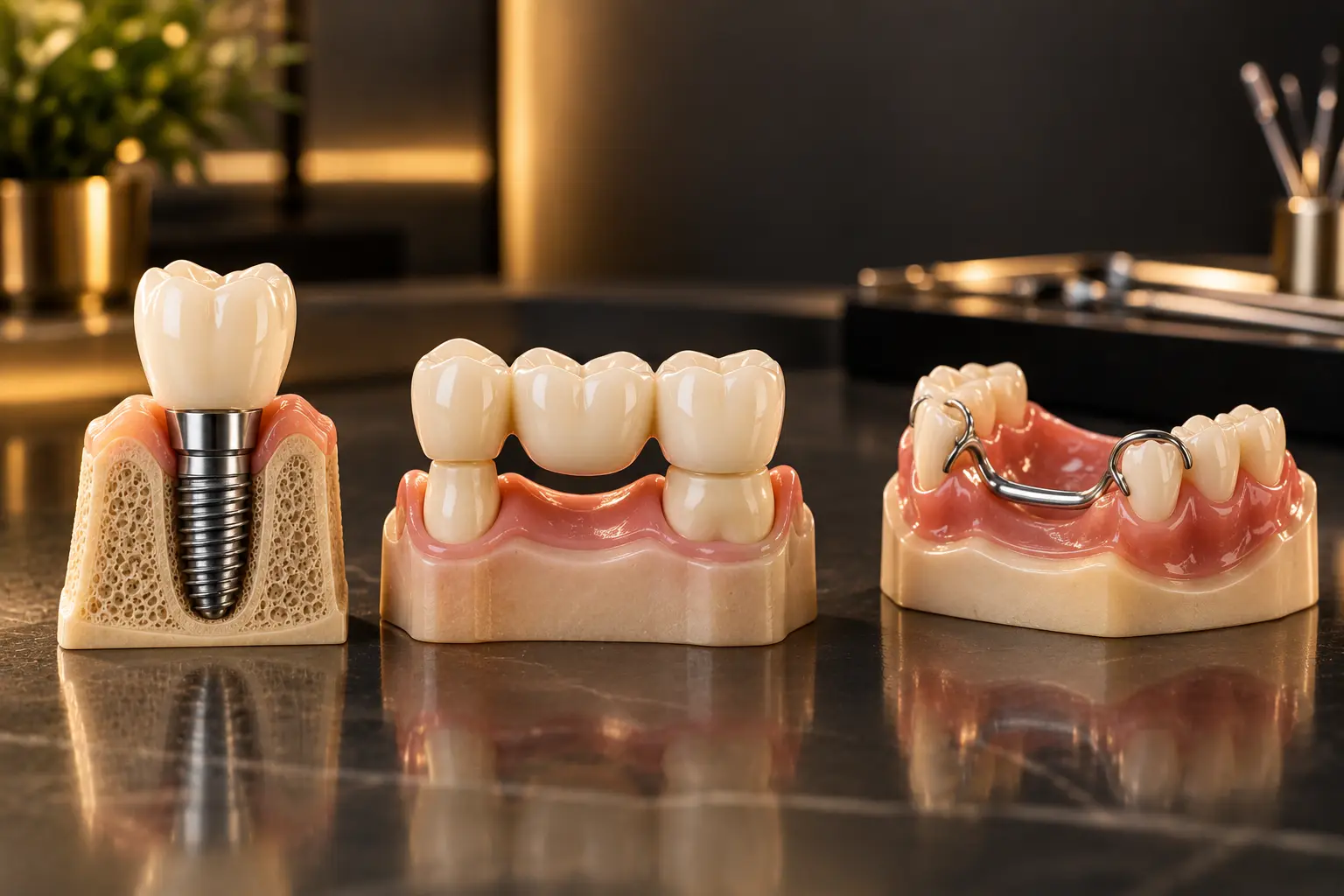
| Feature | Dental Implant | Fixed Bridge | Removable Denture |
|---|---|---|---|
| Preserves jawbone | Yes | No | No |
| Affects healthy teeth | No | Yes (grinds them) | No |
| Feels like a natural tooth | Yes | Mostly | Least |
| Typical lifespan | 15+ years, often lifelong | 7–15 years | 5–8 years |
| Upfront cost | Higher | Moderate | Lower |
| Long-term value | Highest | Moderate | Lowest |
The Dental Implant Procedure, Step by Step
Getting an implant is a staged process spread over a few months, not a single appointment. Here is what actually happens, from your first visit to your final tooth.
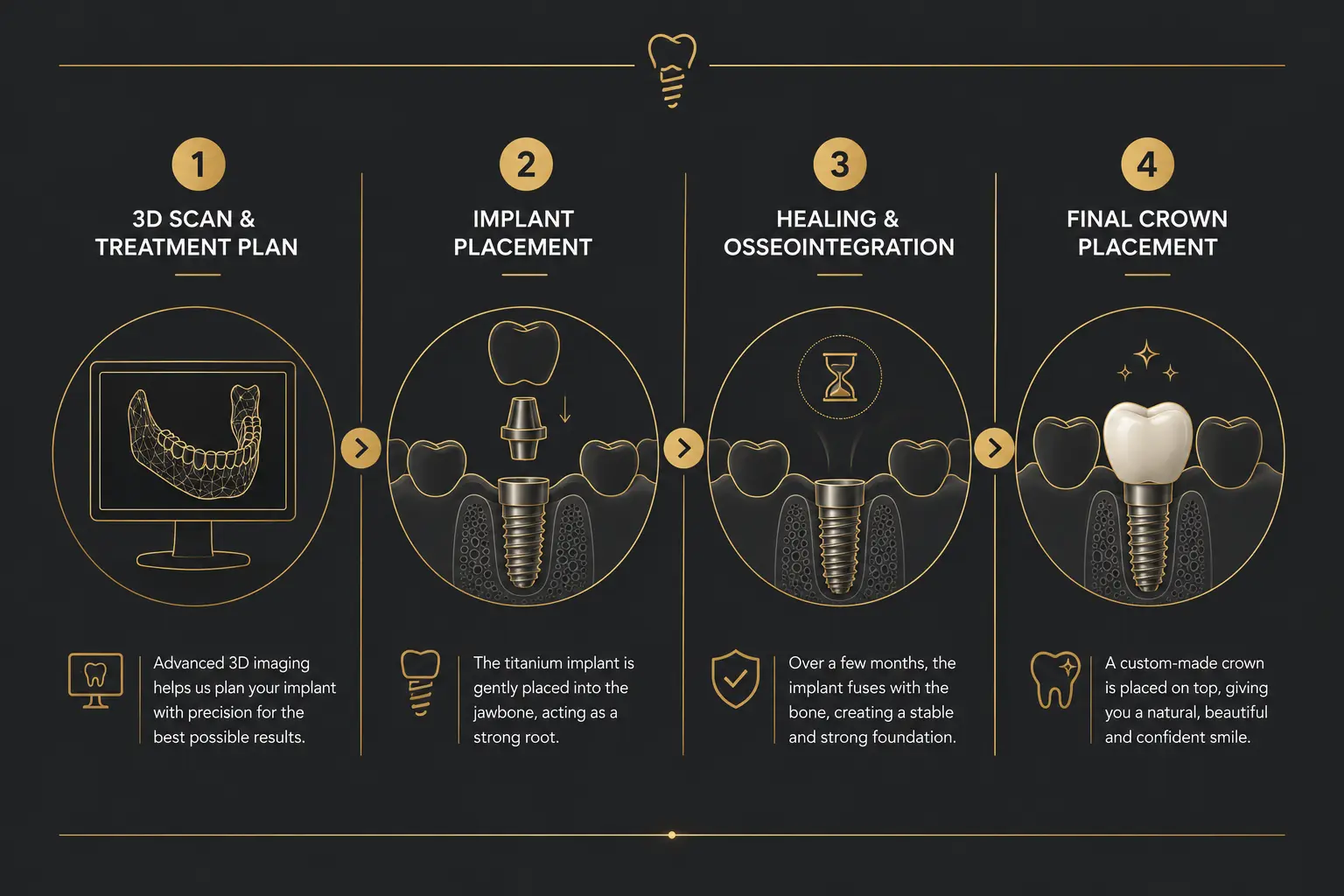
- Consultation and 3D scan. We examine your mouth, review your medical history, and take a CBCT (3D) scan to measure bone height, width, and the position of nerves and sinuses. This is where an honest, personalised plan and quote are created.
- Preparation (if needed). Any infected or unrestorable teeth are removed, and a bone graft or sinus lift is done if there is not enough bone. Healing from grafting can take a few months before implant placement.
- Implant placement. Under local anaesthesia, a small opening is made in the gum and the titanium implant is precisely positioned in the bone. The procedure is comfortable and most patients are surprised by how little it involves.
- Osseointegration (healing). Over roughly 3–6 months, bone cells grow onto the implant surface and lock it in place. A temporary tooth can often be worn during this period.
- Abutment placement. Once the implant has fused, the gum is opened slightly and the abutment is attached. The gum is allowed to heal around it for a couple of weeks.
- Fitting the crown. Impressions or a digital scan are taken, and your custom crown, bridge, or denture is fabricated and fitted. You leave with a fully functional tooth.
How long does it all take?
For a straightforward case, expect 3–4 months from placement to final crown. If bone grafting or extractions are needed first, the total can extend to 6–9 months. Same-day or “immediate load” implants are possible in selected cases, but only when bone quality allows — this is a clinical decision, not a marketing promise.
Does It Hurt? Pain, Recovery & Aftercare
You should not feel pain during implant surgery — the area is fully numbed with local anaesthesia, and most patients report the experience is easier than they feared. Mild soreness, swelling, or minor bruising for a few days afterward is normal and is well controlled with routine pain relief.
The first week: what to expect
- Some swelling and mild discomfort peaking around day 2–3, then settling.
- Stick to soft, lukewarm foods; avoid the surgical site while chewing.
- No smoking — it is one of the biggest causes of implant failure and delayed healing.
- Gentle salt-water rinses after 24 hours; avoid vigorous spitting.
- Take prescribed medication as directed and keep follow-up appointments.
Long-term, an implant is cared for exactly like a natural tooth: brush twice a day, clean between teeth daily, and attend regular check-ups and professional cleanings. Well-maintained implants routinely last well over a decade, and many last a lifetime.
Are You a Candidate for Dental Implants?
Most adults with one or more missing teeth are suitable for implants, but a few factors need to be assessed and sometimes managed first. Only a clinical examination and scan can confirm your suitability.
Good candidates usually have:
- One or more missing teeth, or teeth that cannot be saved.
- Reasonably healthy gums and enough jawbone (or a willingness to have a graft).
- Good general health and a commitment to oral hygiene.
Factors that need managing first:
- Smoking — significantly raises failure risk; cutting down or quitting greatly improves outcomes.
- Uncontrolled diabetes — needs to be well managed for healing.
- Low bone volume — a bone graft or sinus lift can rebuild the foundation.
- Gum disease — should be treated before implants are placed.
This is not a checklist to disqualify yourself with — it is exactly what a good implant consultation is designed to sort out. Many patients who were told elsewhere that they “don’t have enough bone” are treatable with modern grafting techniques.
Dental Implant Cost in Chandigarh
Cost at a glance
Single tooth implant: ₹20,000 – ₹50,000 (implant + crown)
Multiple teeth / implant bridge: ₹60,000 – ₹1,50,000+
Full-mouth (per arch, e.g. All-on-4/6): ₹3,00,000 – ₹8,00,000+
Add-ons: Bone graft ₹8,000–₹30,000 · Sinus lift ₹25,000–₹60,000
Why is there such a wide range? Implant pricing is not one-size-fits-all. The final cost depends on the factors below, which is why a fixed quote is only possible after an examination and scan.
- Implant brand and system — premium global systems cost more than budget options but have long track records.
- Crown material — zirconia crowns cost more than metal-ceramic but look more natural and are very strong.
- Number of implants and whether a full arch is being restored.
- Extra procedures — bone grafting, sinus lifts, or extractions add to the plan.
- Surgeon expertise and clinic technology — 3D planning and guided surgery improve precision and predictability.
A word of caution: the cheapest quote is rarely the best value. Implants are a long-term investment in your health, and choosing a reputable clinic with quality materials and proper diagnostics usually costs less over a lifetime than redoing failed budget work. India remains significantly more affordable than Western countries for the same quality of care.
Benefits and Risks of Dental Implants
Benefits
- Look and feel natural — the closest thing to a real tooth.
- Preserve jawbone and protect your facial structure.
- Do not damage neighbouring teeth, unlike a bridge.
- Restore full chewing power, so you can eat what you enjoy.
- Highly durable — often lasting 15+ years or a lifetime with care.
- Improve speech and confidence compared with loose dentures.
Risks (uncommon, and mostly preventable)
Implants are very safe, but no medical procedure is risk-free. Being informed is part of making a good decision:
- Infection at the implant site, minimised by good hygiene and aftercare.
- Implant failure to integrate, more likely in smokers or poorly controlled diabetes.
- Peri-implantitis (gum inflammation around the implant) if hygiene lapses.
- Rarely, nerve or sinus involvement — which careful 3D planning is specifically designed to avoid.
The reassuring context: large clinical studies have followed thousands of implants for up to 22 years and report cumulative survival of around 98.9% at 3 years, 96.8% at 10 years, and 94% at 15 years. In other words, the vast majority of implants placed and maintained properly are still doing their job many years later.
Myths vs Facts
| Myth | Fact |
|---|---|
| Implant surgery is extremely painful. | It is done under local anaesthesia and most patients report only mild soreness afterward. |
| Implants are only for the elderly. | Any healthy adult with a missing tooth can be a candidate once jaw growth is complete. |
| Implants look fake. | A well-made zirconia crown is matched to your teeth and is virtually indistinguishable. |
| If I have bone loss, I can never get implants. | Bone grafting and sinus lifts rebuild the foundation for most patients. |
| Implants need special maintenance. | You care for them like natural teeth — brushing, flossing, and check-ups. |
| The cheapest implant is just as good. | Material quality, diagnostics, and surgeon skill strongly affect long-term success. |
Expert Tips for a Successful Implant
- Insist on a CBCT scan before any treatment plan — 3D imaging is the standard of care.
- Ask which implant system is being used and why.
- Stop smoking, even temporarily around surgery, to dramatically improve healing.
- Treat gum disease first — implants placed in unhealthy mouths fail more often.
- Keep every follow-up so integration and bite can be checked early.
Common Mistakes Patients Make
- Choosing a clinic on price alone and ending up needing costly re-treatment.
- Delaying treatment until bone loss makes the case more complex.
- Skipping maintenance cleanings once the crown is fitted.
- Ignoring early warning signs like bleeding or looseness around the implant.
Why Choose Pristine Dental in Chandigarh

Pristine Dental is a modern, ethics-first implant practice located at SCO 37, First Floor, Sector 19D, Chandigarh, serving patients across Chandigarh, Mohali, Panchkula, Zirakpur, Kharar, New Chandigarh, and the wider Tricity region. Our approach is simple: educate first, treat transparently, and never over-promise.
- 3D-guided planning using CBCT scans for precise, predictable placement.
- Quality implant systems and zirconia crowns, explained to you clearly before you decide.
- Transparent pricing — you understand every part of your plan and its cost.
- A calm, patient-focused experience for anxious and first-time implant patients.
- Convenient for the whole Tricity, with easy access from Mohali, Panchkula and Zirakpur.
We treat implant dentistry as a long-term relationship, not a one-off transaction — because the real measure of success is how your implant is doing five and ten years from now.
Frequently Asked Questions
How much do dental implants cost in Chandigarh?
A single tooth implant usually costs ₹20,000–₹50,000 including the crown, while full-mouth implants range from ₹3,00,000–₹8,00,000 per arch. The exact figure depends on the implant system, crown material, and whether bone grafting is needed. A precise quote requires an examination and 3D scan.
Are dental implants painful?
No — the procedure is done under local anaesthesia and you should not feel pain during surgery. Mild swelling or soreness for a few days afterward is normal and easily managed with routine pain relief.
How long do dental implants last?
With good hygiene and regular check-ups, implants often last 15 years or more, and many last a lifetime. Large studies report around 96.8% survival at 10 years.
How long does the whole process take?
Most cases take 3–9 months. A straightforward implant takes 3–4 months from placement to final crown; cases needing bone grafting or extractions take longer because of healing time.
Am I too old for dental implants?
There is no upper age limit. What matters is your general health, gum health, and bone volume — not your age. Many patients in their 60s, 70s and beyond do very well.
What if I don’t have enough bone?
A bone graft or sinus lift can rebuild the foundation. Many patients told elsewhere that they “can’t have implants” are in fact treatable with modern techniques.
Can I get all my teeth replaced in one day?
In selected cases, a full arch of fixed teeth can be placed on 4–6 implants in a single visit (All-on-4). Whether this is safe for you depends on your bone quality, which is assessed by scan.
Do implants require special cleaning?
No special products are essential — you brush, clean between your teeth, and attend regular professional cleanings, just as you would for natural teeth.
Is smoking a problem for implants?
Yes. Smoking significantly increases the risk of implant failure and slows healing. Reducing or stopping around the time of surgery greatly improves your chances of success.
Are dental implants safe?
Implants are one of the most predictable procedures in dentistry, with success rates of 95–98% at 10 years. Risks like infection or failure are uncommon and largely preventable with good planning and care.
Can implants fail?
Rarely. When failure happens it is usually linked to smoking, uncontrolled diabetes, gum disease, or poor maintenance. Early follow-ups help catch and address any issue quickly.
Which is better — an implant or a bridge?
An implant preserves bone and does not damage neighbouring teeth, whereas a bridge requires grinding down adjacent teeth. For most single-tooth gaps, an implant offers better long-term value.
When to See a Dentist
Book a consultation if you have a missing tooth, a failing bridge, loose dentures, or a tooth that cannot be saved. The sooner a gap is assessed, the more options you keep, because bone loss makes future treatment more complex. You should also seek advice promptly if an existing implant feels loose, or the gum around it becomes red, swollen, or bleeds.
Conclusion
Dental implants are the most durable, natural-feeling way to replace missing teeth, and modern techniques make them possible for the great majority of patients. The keys to success are simple: an honest diagnosis backed by a 3D scan, quality materials, an experienced hand, and good aftercare. Treatment decisions should always be based on a clinical examination rather than a price list or an online promise — every mouth is different.

Dr. Nakul Singla
— BDS, MDS (Periodontics & Implantology), PGDCC (TMJ & Orofacial Pain)
Periodontist & implantologist with 14+ years’ experience at
Pristine Dental, Sector 19D, Chandigarh. Reviews clinical content for accuracy.
Whatsapp us
☎️ Call +91 87280 70880
Post a comment
Related Posts
Dental Implant vs Bridge vs Denture: How to Choose
✔ Medically reviewed by Dr. Nakul Singla, MDS — Periodontist & Implantologist, Pristine Dental, Chandigarh…
Do Dental Implants Last Forever? Lifespan & Failure Explained
✔ Medically reviewed by Dr. Nakul Singla, MDS — Periodontist & Implantologist, Pristine Dental, Chandigarh…

Are Dental Implants Painful? What to Expect During & After
✔ Medically reviewed by Dr. Nakul Singla, MDS — Periodontist & Implantologist, Pristine Dental, Chandigarh…
Dental Implant Cost in Chandigarh 2026: Price Per Tooth & EMI
✔ Medically reviewed by Dr. Nakul Singla, MDS — Periodontist & Implantologist, Pristine Dental, Chandigarh…